


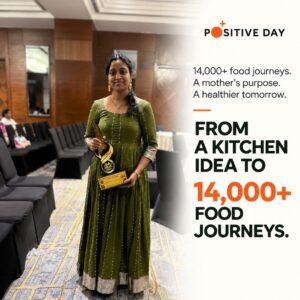
From a Mother’s Kitchen to 14,000 Food Journeys: The Story of Nutreat Founder Jyothi Sri Pappu
Sometimes, meaningful businesses do not begin with a business plan. They begin with a simple personal need.
For Jyothi Sri Pappu, founder of Nutreat, that need was finding clean, honest and minimally processed food for her child. What started in a small kitchen in Malkipuram, Andhra Pradesh, in 2014 eventually grew into a handcrafted food company built around traditional preparation methods, personalised nutrition, direct relationships with farmers and livelihood opportunities for rural women.
A Mother Looking for Better Food
Jyothi holds a Master’s degree in Pharmacy from Sri Ramachandra University, Chennai. Her education gave her an understanding of ingredients, processing methods and preservatives, while her mother and grandmother introduced her to a much older understanding of food — one rooted in nourishment, tradition and family wisdom.
The idea for Nutreat emerged after the birth of her son, Jaithra.
When it was time to introduce him to his first foods, Jyothi began examining the baby-food options available in the market. She wanted something fresh and minimally processed rather than food primarily designed around long shelf life and mass production.
She researched, spoke to paediatricians and friends, and eventually turned to her grandmother.
Her grandmother shared a traditional baby-food recipe and told her it should be prepared using a stone grinder. That simple piece of advice became a turning point.
Initially, Jyothi prepared the food only for her son. But other mothers noticed and began asking if she could make the same food for their children.
Nutreat was not originally planned as a company. It grew from those requests.
In 2014, Jyothi began the journey in Malkipuram with just two recipes — one for babies and another designed to be diabetic-friendly.
Bringing Traditional Food Wisdom Into Modern Life
As Nutreat developed, Jyothi identified a wider problem: many families want nutritious, traditionally prepared food but may not have the time, knowledge or equipment to make it themselves.
She also felt that three important elements were often missing from conventional packaged food: transparency, personalisation and traditional processing.
This became central to Nutreat’s approach.
Rather than assuming one recipe works for everyone, the company focuses on customised food made after an order is placed, taking individual needs into consideration.
The approach eventually expanded beyond children to people across different age groups and requirements.
When Personalisation Changed the Journey
A significant turning point came in 2017, when a customer from Sri Lanka contacted Nutreat asking for something specifically designed for her child.
That conversation helped Jyothi see that personalisation could become the heart of the company.
Since then, according to her founder story, Nutreat has worked on more than 14,000 customised food journeys.
Even as the company developed, it continued using four signature traditional processes: sprouting, sun-drying, slow roasting and stone-grinding.
One early customer interaction particularly stayed with Jyothi.
A mother from Gujarat called to tell her that her baby would eat only Nutreat’s food and was gaining healthy weight. Jyothi was still so new to entrepreneurship that she did not think to ask for a testimonial. But the conversation gave her something more valuable at that stage — confidence to continue.
Creating Opportunities Beyond the Kitchen
Nutreat’s story also became connected with rural livelihoods.
During the pandemic, ingredient movement and logistics became uncertain, while many rural women were also facing loss of income.
Through Project Sanative, in collaboration with the Smart Village Movement team, Nutreat worked to create opportunities for rural women. A 30-day motivation and training programme was conducted across villages, helping establish a system in which women could perform traditional processes such as hand-pounding and stone-grinding closer to their homes.
But the journey also brought difficult lessons.
At one stage, Nutreat had to let go of more than 40 women after realising production had grown beyond genuine customer demand. For Jyothi, the experience raised an important question about what responsible growth should actually look like.
Instead of creating artificial demand simply to sustain production, she began thinking more deeply about balancing purpose with operational and financial sustainability.
Redefining What Growth Means
Jyothi says her understanding of entrepreneurship has changed significantly over the years.
She once associated growth with producing and selling more. Today, she sees it differently: creating the right amount, responding to genuine needs and building dignity throughout the value chain.
Another important lesson has been learning that passion needs systems.
A founder cannot personally manage every recipe, customer interaction and operational decision forever. Documenting knowledge, delegating responsibly and developing a capable team became an important part of building the organisation.
A Future Built Around Local Nourishment
Jyothi’s vision for the next phase of Nutreat extends beyond selling food products.
Over the next two to three years, she hopes to develop local nourishment hubs across India — places where food can be prepared locally, traditional recipes can be preserved, women can find dignified livelihood opportunities, farmers can receive greater visibility and communities can learn to eat more consciously.
For her, the success of a food company should not be measured only by revenue or the number of packets it produces.
She wants success to also reflect the traditions revived, food waste prevented, farmers and women supported, and children introduced to clean, local and honest food.
Nutreat’s journey is therefore not simply a story about building another food brand.
It is a story about taking knowledge passed from one generation to another and finding a place for it in modern life. It shows how something as personal as a mother preparing her child’s first food can grow into an idea touching families, farmers and rural communities.
And perhaps Jyothi’s own reflection captures the journey best: starting does not require knowing everything. What matters is listening carefully, staying connected to the people being served and remembering the reason the journey began in the first place.