


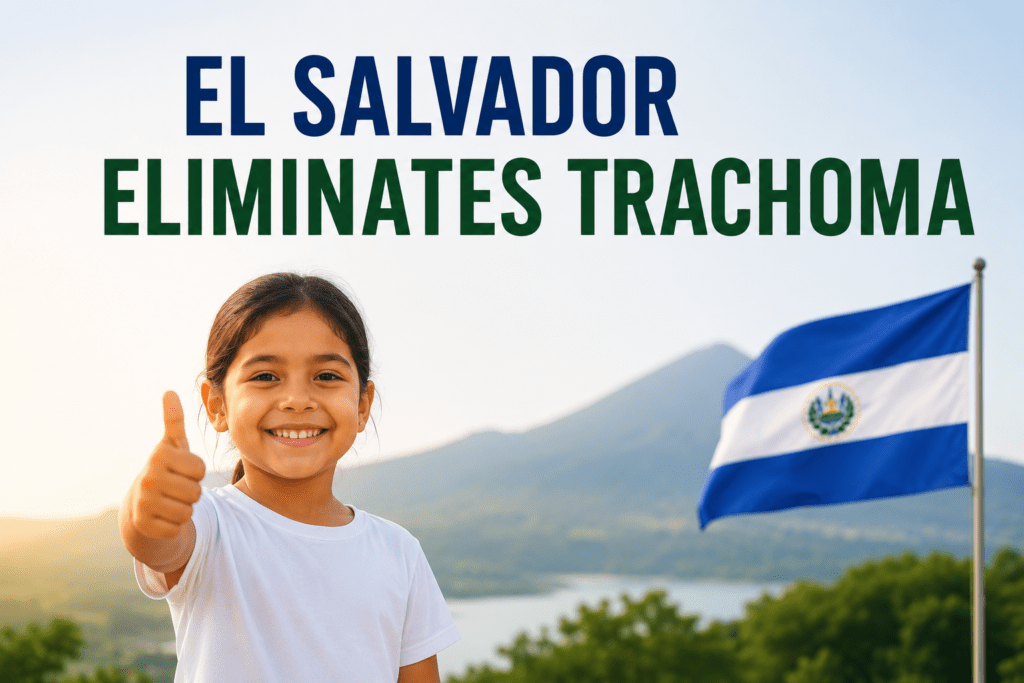
El Salvador Eliminates Trachoma: A Landmark Public Health Victory Against Preventable Blindness
In a remarkable achievement for global public health, El Salvador has officially eliminated trachoma as a public health problem, becoming one of the latest countries to reach this important milestone. The announcement, recognized by the World Health Organization (WHO), reflects years of coordinated efforts involving healthcare workers, government agencies, local communities, and international partners. It is a powerful reminder that with sustained commitment, even long-standing infectious diseases can be brought under control.
Trachoma is the world’s leading infectious cause of blindness. It is caused by repeated infection with the bacterium Chlamydia trachomatis, primarily affecting people living in areas with limited access to clean water, sanitation, and healthcare. If left untreated, repeated infections can cause the eyelids to turn inward, allowing eyelashes to scratch the surface of the eye and eventually leading to irreversible blindness.
For decades, trachoma has affected millions of people, particularly in low-income communities. El Salvador’s success demonstrates that effective public health strategies can protect vulnerable populations and improve quality of life.
A Journey of Persistence and Partnership
El Salvador’s achievement did not happen overnight. It is the result of years of planning, investment, and collaboration between the Ministry of Health, healthcare professionals, community volunteers, and international organizations.
The country implemented the SAFE strategy, recommended by the World Health Organization, which includes Surgery for advanced cases, Antibiotics to treat infections, Facial cleanliness to reduce disease transmission, and Environmental improvements, such as better sanitation and access to clean water.
Health workers traveled to remote communities to identify cases, provide treatment, educate families about hygiene, and strengthen disease surveillance. Community awareness campaigns encouraged simple practices like regular face washing and maintaining clean surroundings, helping reduce the spread of infection.
These combined efforts significantly reduced new infections and ensured that trachoma was no longer considered a public health concern across the country.
More Than a Medical Achievement
Eliminating trachoma is about much more than preventing blindness. Good vision supports education, employment, independence, and overall well-being.
Children are better able to attend school, adults can continue working and supporting their families, and older people can maintain a higher quality of life without preventable vision loss. By reducing the burden of disease, communities become healthier and more productive.
The success also strengthens El Salvador’s healthcare system by demonstrating the effectiveness of preventive care, early diagnosis, and community-based health programs. Investments in clean water, sanitation, and public education provide benefits that extend well beyond trachoma, helping reduce other infectious diseases as well.
A Milestone With Global Significance
The World Health Organization has identified neglected tropical diseases as a major global health priority. Trachoma remains endemic in several countries, particularly in parts of Africa and some regions of Asia, where millions of people continue to be at risk.
El Salvador’s accomplishment adds to the growing list of countries that have successfully eliminated trachoma as a public health problem. Each success provides valuable lessons for other nations working toward the same goal, proving that elimination is achievable through sustained commitment and evidence-based interventions.
International health experts hope this milestone will encourage continued investment in disease prevention, particularly in underserved communities where access to healthcare remains limited.
A Balanced Perspective
Although this is a major public health success, elimination does not mean the disease has disappeared completely. Instead, it means trachoma has been reduced to levels where it is no longer considered a significant public health threat.
Health authorities must continue monitoring communities, maintaining surveillance systems, and responding quickly if new cases emerge. Continued improvements in sanitation, hygiene, and healthcare access will remain essential to preventing the disease from returning.
The achievement therefore marks the beginning of a new phase focused on maintaining progress rather than ending public health efforts.
Why This Matters
El Salvador’s success offers hope at a time when many global health challenges continue to demand attention. It shows that long-term investments in prevention, education, and primary healthcare can produce life-changing results.
Perhaps the most inspiring aspect of this achievement is that it was accomplished through practical, community-focused solutions rather than expensive medical technologies alone. Clean water, improved sanitation, accessible healthcare, and public awareness proved to be powerful tools in preventing blindness and improving lives.
As more countries work toward eliminating neglected tropical diseases, El Salvador’s journey stands as an encouraging example of what can be achieved through collaboration, persistence, and a commitment to equitable healthcare.
This milestone is not only a victory for El Salvador but also a positive reminder that global health progress is possible. With continued international cooperation and community engagement, millions more people around the world could one day live free from diseases that have affected generations.