


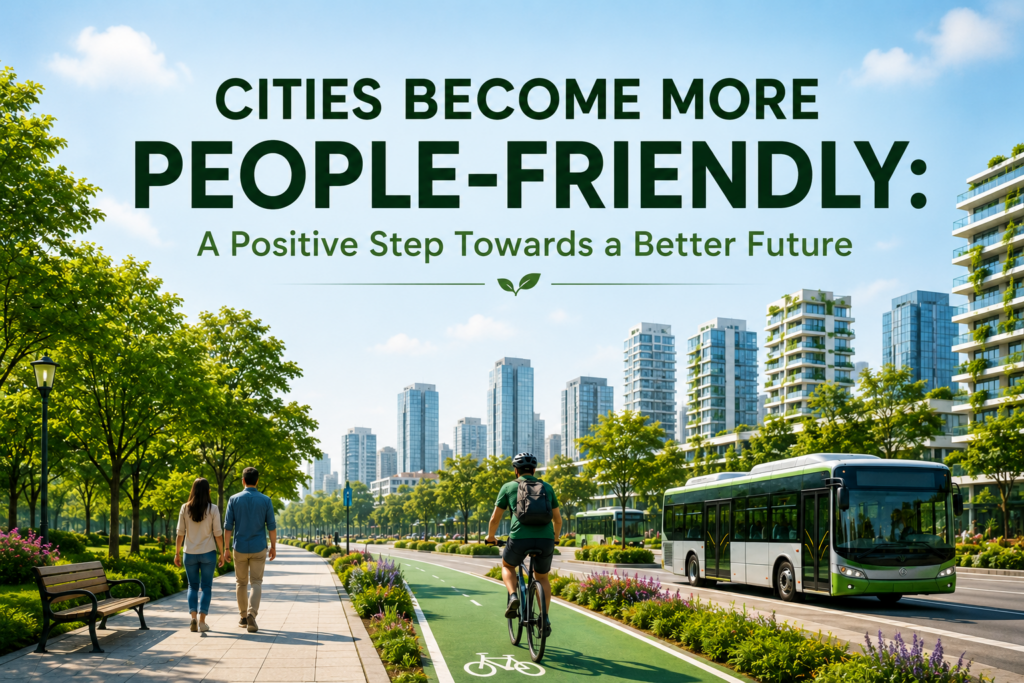
Cities Become More People-Friendly: A Positive Step Towards a Better Future
Introduction
Cities around the world are undergoing a remarkable transformation. Instead of designing urban spaces solely for vehicles, governments and city planners are increasingly focusing on creating environments that prioritize people. Safer streets, better cycling infrastructure, cleaner public transport, and greener public spaces are becoming central to urban development. This shift not only improves the quality of life for residents but also supports environmental sustainability and economic growth. Inspired by successful examples highlighted by UN-Habitat, many cities are proving that thoughtful urban planning can create healthier communities.
Why Cities Are Changing
For many years, rapid urbanization led to roads crowded with cars, heavy traffic congestion, rising pollution, and limited public spaces. As populations grew, these challenges became more evident, affecting people’s health and overall well-being.
Today, city planners recognize the need to redesign urban spaces with people at the center. The goal is to create cities where walking, cycling, and using public transport are safe, convenient, and enjoyable.
1. Safer Cycling Infrastructure
One of the biggest improvements seen in modern cities is the development of dedicated cycling infrastructure.
Key Features:
- Protected bicycle lanes separated from vehicle traffic.
- Secure bicycle parking facilities.
- Public bike-sharing programs.
- Traffic signals designed specifically for cyclists.
Benefits:
- Encourages eco-friendly transportation.
- Reduces traffic congestion.
- Lowers carbon emissions.
- Promotes physical fitness and mental well-being.
Countries like the Netherlands have demonstrated that investing in cycling infrastructure can significantly improve urban mobility while creating healthier communities.
2. More Walkable Neighborhoods
Walking is one of the simplest and healthiest forms of transportation. Many cities are redesigning neighborhoods to make walking safer and more accessible.
Improvements Include:
- Wider sidewalks.
- Well-marked pedestrian crossings.
- Traffic calming measures.
- Car-free streets in busy commercial areas.
Positive Impact:
- Encourages daily physical activity.
- Supports local businesses as pedestrians are more likely to visit nearby shops and cafés.
- Reduces road accidents.
- Creates more vibrant and social public spaces.
Walkable neighborhoods strengthen community connections while improving residents’ overall quality of life.
3. Expansion of Green Spaces
Urban green spaces have become an essential part of sustainable city planning.
Examples:
- Public parks.
- Community gardens.
- Tree-lined streets.
- Green rooftops.
- Recreational open spaces.
Benefits:
- Improves air quality.
- Helps reduce urban temperatures.
- Supports biodiversity.
- Provides places for relaxation and recreation.
- Enhances mental health by reducing stress and anxiety.
Green spaces make cities healthier while creating opportunities for families and communities to spend time outdoors.
4. Better Public Transportation
Reliable public transportation is another important focus of people-friendly cities.
Recent Improvements:
- Expansion of metro and railway networks.
- Introduction of electric buses.
- Increased frequency of public transport services.
- Integration of buses, trains, cycling routes, and pedestrian pathways.
Advantages:
- Reduces dependence on private vehicles.
- Decreases traffic congestion.
- Lowers greenhouse gas emissions.
- Makes commuting more affordable and efficient.
An efficient public transportation system benefits both the environment and the economy. Learn more about renewable energy and clean transport.
5. Smart Technology for Smarter Cities
Technology is playing a major role in improving urban life.
Smart City Innovations:
- Intelligent traffic management systems.
- Real-time public transport tracking.
- Mobile applications for bike-sharing services.
- Digital reporting systems for road maintenance and public issues.
Outcomes:
- Faster travel times.
- Better traffic flow.
- Improved public services.
- Greater convenience for residents.
Smart technology helps cities operate more efficiently while improving everyday experiences.
Environmental Benefits
People-friendly cities contribute significantly to environmental protection.
Environmental Advantages:
- Reduced air pollution.
- Lower carbon dioxide emissions.
- Less noise pollution.
- Increased use of renewable transportation options.
- Improved climate resilience through expanded green spaces.
These changes support global efforts to combat climate change and promote sustainable development.
Social and Economic Benefits
Urban improvements benefit not only the environment but also society and the economy.
Social Benefits:
- Stronger community relationships.
- Safer neighborhoods.
- Better public health.
- Increased opportunities for recreation.
- Improved mental well-being.
Economic Benefits:
- Growth of local businesses.
- Increased tourism.
- Higher property values.
- Reduced healthcare costs due to healthier lifestyles.
- More attractive investment opportunities.
Well-designed cities create long-term value for both residents and businesses.
Looking Ahead
Many cities are now setting ambitious goals to become greener, cleaner, and more accessible. Investments in sustainable infrastructure, renewable energy, and community-focused planning continue to reshape urban environments.
As technology advances and environmental awareness grows, future cities are expected to become even more efficient, resilient, and inclusive. Governments, businesses, and citizens all have important roles to play in supporting this transformation.
Conclusion
The movement toward people-friendly cities is one of the most encouraging developments in urban planning today. By prioritizing pedestrians, cyclists, public transportation, and green spaces, cities are becoming healthier, safer, and more sustainable. These improvements not only reduce environmental impact but also strengthen communities, support local economies, and enhance the overall quality of life. As more cities embrace this people-first approach, they are setting a positive example for future generations and demonstrating that thoughtful planning can build a brighter and more sustainable world.