


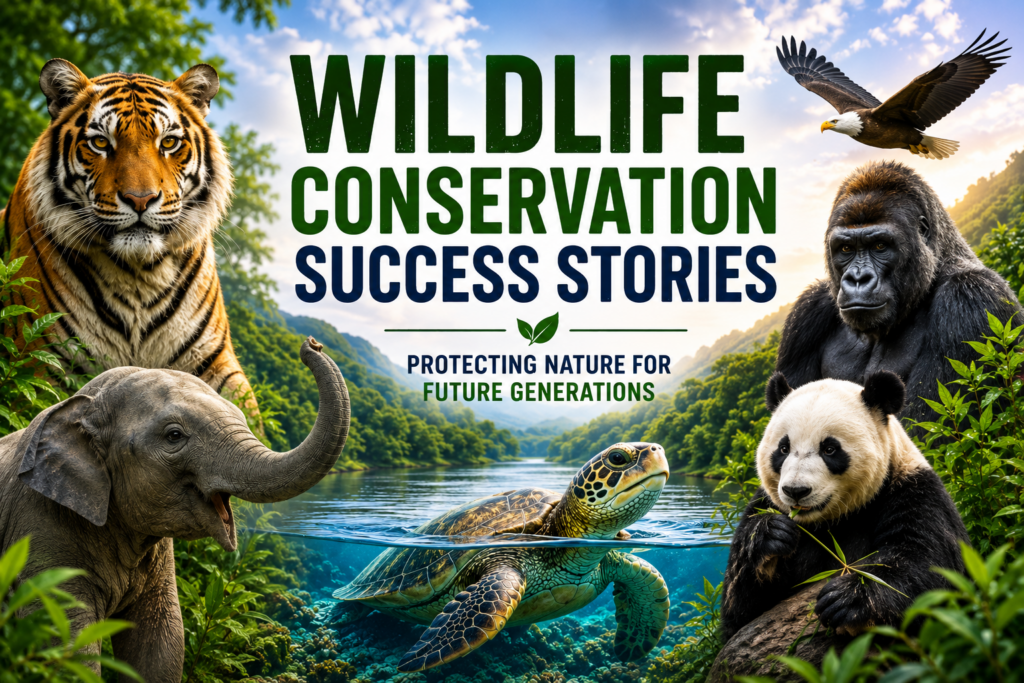
Wildlife Conservation Success Stories: Protecting Nature for Future Generations
Introduction
Wildlife conservation has become one of the most important global efforts in protecting the environment and preserving biodiversity. According to the World Wildlife Fund (WWF), wildlife conservation is essential for maintaining biodiversity and ecological balance. Across the world, governments, environmental organizations, scientists, and local communities are working together to save endangered species and restore natural habitats.
Over the past few decades, many animal species faced serious threats due to deforestation, pollution, climate change, illegal hunting, and habitat destruction. However, conservation programs, awareness campaigns, and stricter environmental protection laws have helped several endangered species recover successfully.
These wildlife conservation success stories provide hope and show that with proper planning, awareness, and collective effort, it is possible to protect nature and create a better future for both animals and humans.
Importance of Wildlife Conservation
Wildlife plays a crucial role in maintaining ecological balance and healthy ecosystems. Every species contributes to nature in some way, whether through pollination, seed dispersal, maintaining food chains, or protecting forests and water systems.
When animal populations decline, ecosystems become unstable, affecting biodiversity and environmental health. Wildlife conservation helps protect natural habitats, maintain ecological balance, and preserve the planet’s resources for future generations.
Conservation efforts also support tourism, scientific research, and environmental education while increasing awareness about the importance of protecting nature.
Tiger Conservation in India
One of the most successful wildlife conservation stories comes from India’s tiger protection programs. Decades ago, tiger populations were declining rapidly due to poaching and habitat destruction. To address this issue, the government launched Project Tiger and created protected reserves across the country.
Today, India is home to the largest tiger population in the world. National parks and wildlife sanctuaries have helped provide safe habitats for tigers while anti-poaching measures and public awareness campaigns continue protecting these animals.
Tiger conservation has also helped preserve forests and ecosystems that support many other species. The success of tiger protection programs demonstrates how focused conservation efforts can produce positive environmental results.
Recovery of Endangered Species Worldwide
Several endangered species across the world have shown encouraging population growth because of conservation initiatives. Animals such as giant pandas, mountain gorillas, sea turtles, and certain whale species have experienced recovery due to habitat protection and breeding programs.
Protected wildlife reserves and marine conservation zones have reduced human interference and allowed species to reproduce more safely. International cooperation between countries has also strengthened efforts to combat illegal wildlife trade and environmental destruction.
These positive developments show that conservation programs can make a real difference when supported consistently.
Role of Protected Habitats
Protected forests, national parks, wildlife sanctuaries, and marine reserves are essential for wildlife survival. These protected areas provide animals with safe spaces where they can live, breed, and maintain healthy populations without excessive human disturbance.
Many countries are expanding protected habitats to conserve biodiversity and reduce deforestation. Conservation organizations are also restoring damaged ecosystems by planting trees, cleaning rivers, and protecting wetlands.
Healthy ecosystems support not only wildlife but also local communities by improving air quality, water availability, and climate stability.
Community Participation in Conservation
Local communities play an important role in wildlife conservation. In many regions, villagers, tribal groups, and volunteers are actively participating in forest protection, eco-tourism projects, and wildlife monitoring programs.
Wildlife awareness campaigns featured by National Geographic Wildlife help educate people about conservation efforts worldwide.
Environmental education and awareness campaigns are encouraging people to understand the importance of protecting animals and natural habitats. Schools, colleges, and youth organizations are increasingly promoting sustainability and wildlife protection activities.
Community involvement helps reduce illegal hunting, deforestation, and environmental damage while creating sustainable livelihood opportunities through eco-tourism and conservation projects.
Technology Supporting Wildlife Protection
Modern technology is helping improve wildlife conservation efforts significantly. Drones, satellite tracking systems, GPS collars, and camera traps are being used to monitor animal movements and protect endangered species more effectively.
Artificial intelligence and data analysis tools are helping researchers identify threats such as poaching and habitat loss. Conservationists can now track wildlife populations more accurately and respond faster to environmental challenges.
Social media and digital platforms are also spreading awareness about wildlife conservation and encouraging global support for environmental protection.
Marine Conservation Efforts
Wildlife conservation is not limited to forests and land animals. Oceans and marine ecosystems are also receiving increased attention. Governments and environmental groups are working to protect coral reefs, sea turtles, dolphins, whales, and other marine species.
Reducing plastic pollution, controlling illegal fishing, and creating marine protected areas are helping improve ocean health. Coastal communities are also becoming more involved in protecting marine biodiversity and promoting sustainable fishing practices.
Healthy oceans are essential for climate balance, food security, and biodiversity conservation worldwide.
Challenges That Still Exist
Despite many positive achievements, wildlife conservation still faces several challenges. Climate change, urbanization, pollution, and illegal wildlife trade continue to threaten many species and ecosystems.
Conservation projects often require long-term funding, scientific research, and international cooperation to succeed. Balancing economic development with environmental protection also remains a challenge in many countries.
However, growing environmental awareness and stronger global cooperation are helping create more effective conservation strategies and encouraging positive action worldwide.
A Positive Future for Wildlife Conservation
The success stories emerging from wildlife conservation efforts provide hope for the future. More governments, organizations, businesses, and individuals are recognizing the importance of protecting biodiversity and supporting environmental sustainability.
Wildlife conservation also connects with sustainable urban development and Eco-Friendly Cities and Green Transport initiatives.
Young people are also becoming increasingly involved in climate action and wildlife awareness campaigns, helping create a new generation that values environmental responsibility.
As technology, education, and conservation programs continue improving, there is strong potential to protect more endangered species and restore ecosystems around the world.
Conclusion
Wildlife conservation success stories show that positive environmental change is possible when people work together to protect nature. From tiger conservation in India to marine protection projects worldwide, conservation efforts are helping endangered species recover and ecosystems thrive again.
Protecting wildlife is not only important for animals but also for maintaining ecological balance, supporting communities, and ensuring a sustainable future for humanity. Continued awareness, innovation, and global cooperation will play a vital role in preserving biodiversity for future generations.
The progress made in wildlife conservation reminds us that responsible action and collective effort can help build a healthier planet where both humans and wildlife can coexist peacefully.