









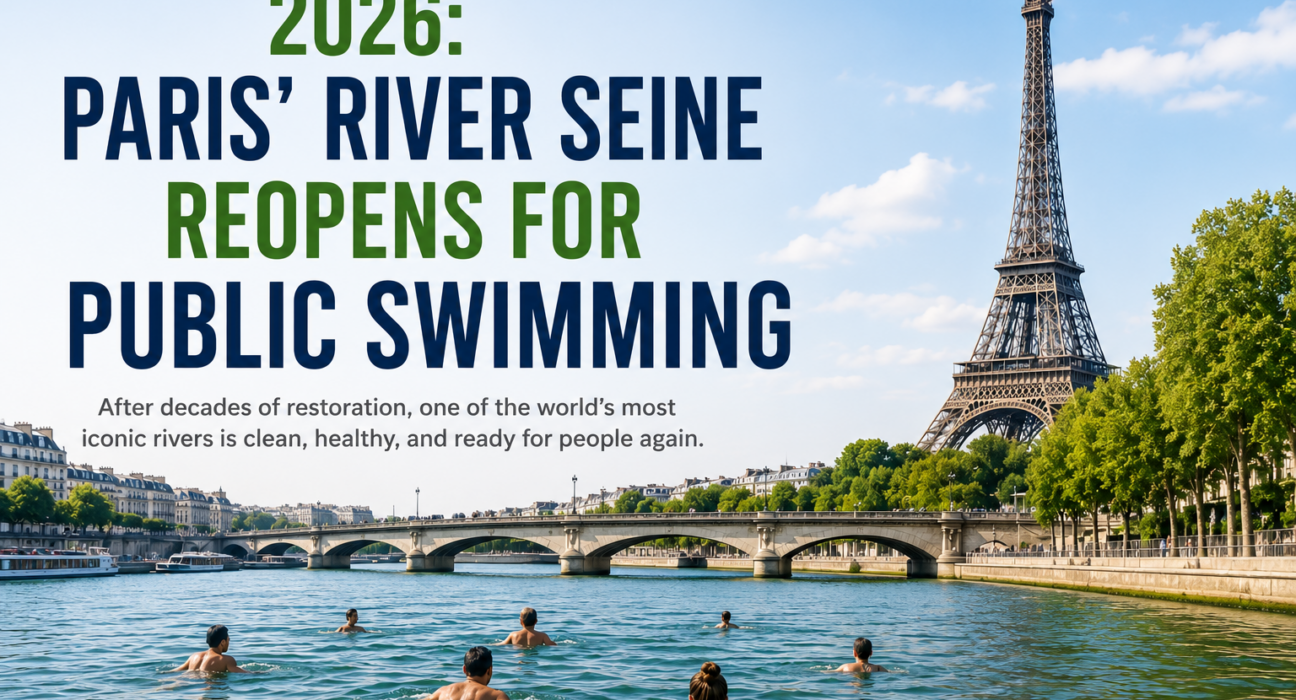
Paris’ River Seine Reopens for Public Swimming After Decades of Restoration
For the first time in more than a century, the River Seine in Paris has reopened selected areas for public swimming, marking one of the world’s most inspiring environmental success stories. Once heavily polluted and considered unsafe for recreational use, the Seine has undergone decades of restoration through large-scale investments in wastewater treatment, improved sanitation systems, and stricter environmental regulations.
The reopening is a proud moment not only for France but also for cities around the world looking for sustainable ways to restore urban rivers. It proves that long-term environmental efforts can transform polluted waterways into clean, safe, and enjoyable public spaces.
A River with a Rich History
The Seine is one of Europe’s most famous rivers and flows through the heart of Paris. It has long been an important part of the city’s history, culture, and daily life. However, rapid urbanization and industrial growth during the 19th and 20th centuries caused pollution levels to rise dramatically.
Swimming in the Seine was officially banned in 1923 because the water became unsafe due to untreated sewage, industrial waste, and poor water quality. For decades, the river remained a symbol of environmental challenges faced by many growing cities around the world.
Decades of Restoration
Improving the Seine did not happen overnight. French authorities spent many years planning and implementing projects to clean the river. Billions of euros were invested in modern wastewater treatment plants, upgraded sewer systems, and infrastructure designed to reduce pollution entering the river.
Environmental agencies also introduced stricter water-quality monitoring and worked with local communities to reduce waste and protect the ecosystem. These combined efforts gradually improved the health of the river, making it cleaner and safer each year.
Public Swimming Returns
After years of testing and monitoring, selected areas of the Seine have now reopened for public swimming. The decision follows consistent improvements in water quality that meet health and safety standards.
Residents and visitors can once again enjoy recreational activities in parts of the river, something that had been impossible for generations. The reopening also reflects Paris’ broader commitment to creating greener public spaces and improving the quality of urban life.
Benefits for People and Nature
The restoration of the Seine offers benefits that go far beyond swimming.
Cleaner water supports healthier ecosystems by providing better habitats for fish, birds, and other wildlife. The improved river environment also creates attractive public spaces where people can relax, exercise, and connect with nature.
A healthier river contributes to tourism, boosts local businesses, and improves the overall quality of life for residents. It also demonstrates how environmental investments can generate long-term economic and social benefits.
A Balanced Perspective
Although the reopening is a major achievement, officials emphasize that maintaining the Seine’s water quality requires ongoing effort.
Heavy rainfall can occasionally overwhelm drainage systems and temporarily reduce water quality. As a result, swimming areas may close temporarily whenever health standards are not met. Continuous monitoring, maintenance, and public cooperation remain essential to keeping the river clean in the future.
This reminds us that environmental restoration is not a one-time project but a long-term commitment that requires consistent care and responsible management.
A Model for Cities Around the World
Many rivers in large cities continue to face pollution, making the Seine’s transformation an important example for others. It shows that governments, scientists, environmental organizations, and local communities can work together to restore damaged ecosystems.
Cities around the world can learn valuable lessons from Paris by investing in better sanitation, protecting waterways, and encouraging sustainable urban development. The success of the Seine proves that even heavily polluted rivers can recover with the right policies and long-term planning.
Looking Ahead
The reopening of the Seine represents more than just cleaner water—it symbolizes hope for environmental restoration worldwide. As climate change and urbanization continue to challenge natural ecosystems, projects like this demonstrate that positive change is possible when nations remain committed to protecting the environment.
Future generations will benefit from cleaner rivers, healthier ecosystems, and more sustainable cities if similar efforts continue around the world.
Conclusion
The return of public swimming to the River Seine is a remarkable environmental milestone. After decades of restoration, one of the world’s most iconic rivers has become cleaner, healthier, and more welcoming for both people and wildlife.
While continued monitoring and maintenance are still necessary, this achievement proves that long-term environmental investment can deliver lasting results. The Seine’s transformation offers hope and inspiration to cities across the globe, showing that with patience, innovation, and collective action, even the most polluted waterways can be restored for future generations.
Explore more positive news
Visit the City of Paris