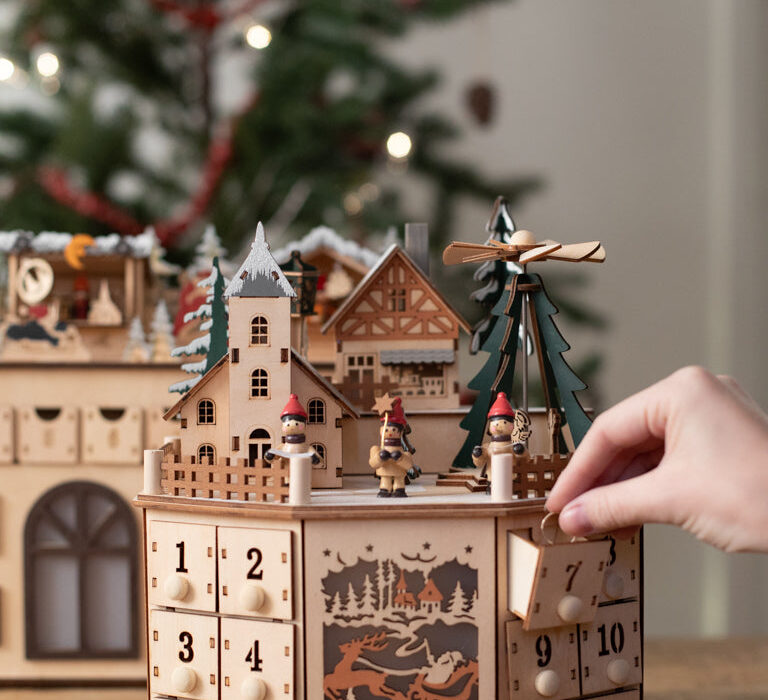
Advent calendars, those delightful daily door-openers counting down to Christmas, originated in 19th-century Germany as simple chalk marks on walls, evolving into cherished global symbols of festive anticipation beloved by families worldwide.Humble Beginnings in Lutheran Homes

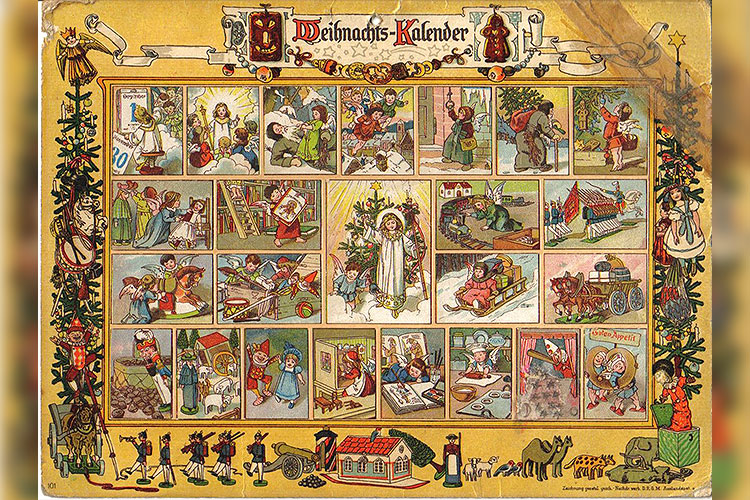 The tradition traces back to 1839 when German Protestants began marking chalk lines on kitchen doors from December 1 to Christmas Eve, helping children track the four weeks of Advent; a season of preparation in the Christian liturgical calendar. By the late 1800s, families crafted paper versions with Bible verses or numbered windows, with early printed examples like Gerhard Lang’s 1908 calendar featuring 24 glue-on stars. Lang, inspired by his mother’s homemade treats for him, founded the Reichhold & Lang firm, pioneering the first commercial calendar with chocolate-filled doors in 1920.Chocolate Revolution and Global SpreadPost-World War II, advancements in printing and foil-wrapping propelled advent calendars into mass popularity, especially with Walter Lange’s 1958 “Christmas Train” design. The 1950s chocolate boom transformed them into edible treasures, as brands like Lübeck and Mueller added milk chocolate surprises behind illustrated flaps depicting nativity scenes or winter villages. By the 1970s, they crossed borders: British families embraced them via imports, while American commercialization via Hallmark in the 1950s fused them with secular holiday cheer.Modern Innovations Worldwide
Today, advent calendars boast endless varieties from beauty minis by Sephora to whiskey samples by Johnnie Walker valued at a $2 billion market. Digital versions and eco-friendly paper-free apps reflect 21st-century twists, yet the core joy endures: daily discoveries fostering patience and wonder. As 2025 marks nearly two centuries, this Lutheran custom continues lighting up homes from Europe to India.