


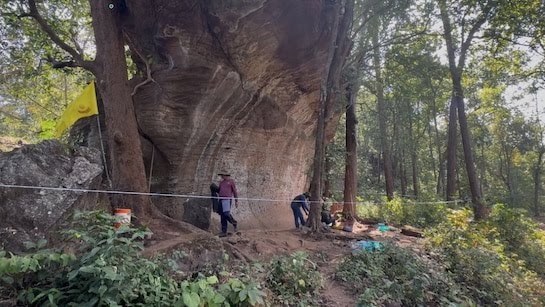
Odisha is poised to rewrite the history of human settlement in South Asia as the Archaeological Survey of India (ASI) begins a significant excavation in the Bargarh district. Preliminary findings suggest the existence of a civilization dating back approximately 10,000 years, potentially bridging the gap between the Epipaleolithic and Neolithic eras in the region. This discovery highlights the Gandhamardan hill range as a cradle of ancient human culture, offering a fascinating glimpse into the lives of our prehistoric ancestors.
The site, located near the banks of the Ang River, first caught the attention of researchers due to the discovery of unique stone tools and microliths. These artifacts indicate that the early inhabitants were not just nomadic hunter-gatherers but had begun developing sophisticated methods for survival and social organization. Archeologists believe that the strategic location—nestled between fertile river valleys and resource-rich hills—provided the perfect ecosystem for one of India’s earliest settled communities to flourish.
Significance of the Excavation
The ongoing dig is expected to provide critical data on several fronts:
- Technological Evolution: The stone tools found at the site show a transition toward “microlithic” technology, where smaller, more precise blades were used for hunting and domestic tasks.
- Settlement Patterns: Evidence of hearths and structural remains suggests a semi-permanent or permanent lifestyle, predating many known civilizations in the eastern part of the country.
- Climate Adaptation: By analyzing soil layers and fossilized pollen, scientists hope to understand how these ancient people adapted to the shifting climate of the post-Ice Age era.
Local historians and residents are viewing this as a moment of immense cultural pride. The Gandhamardan hills, already legendary in Indian mythology, are now gaining a new identity as a global archaeological hotspot. The ASI’s systematic approach, utilizing modern carbon dating and stratigraphic analysis, aims to establish a definitive timeline that could link this site to other major prehistoric discoveries across the Indian subcontinent.
As the layers of earth are carefully peeled back, the “Bargarh discovery” promises to be more than just a local find; it is a vital piece of the puzzle in understanding the early migration and survival of the human race. The state government is already considering the development of an interpretation center to showcase these findings, ensuring that the legacy of this 10,000-year-old civilization continues to inspire future generations.