


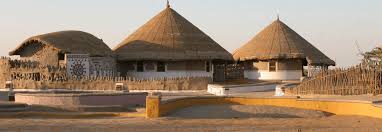
In the arid and culturally rich region of Kutch, Gujarat, a unique style of architecture has stood the test of time—Bhunga huts. These circular mud houses, with their thatched roofs and intricately decorated walls, are an essential part of Kutch’s heritage. Designed to withstand the extreme climate of the region, Bhungas offer a perfect blend of functionality and aesthetics.
The Ingenious Design of Bhungas
The Bhunga huts are specifically built to tackle the challenges posed by the harsh weather conditions in Kutch:
-
Cool in Summer, Warm in Winter
The thick mud walls provide natural insulation, keeping the interiors cool during scorching summers and warm during chilly winters. -
Earthquake-Resistant Structures
Kutch is a seismic-prone region, and Bhunga huts have an advantage due to their circular shape and flexible construction materials. Unlike conventional buildings, these huts can withstand strong tremors with minimal damage. -
Wind-Resistant and Sturdy
The aerodynamic design of Bhungas allows them to resist strong desert winds, making them durable against harsh environmental conditions.
A Canvas of Art and Culture
Apart from their functional excellence, Bhungas are a visual delight. The outer walls are often adorned with Lippan Kaam, a traditional Kutchi mud-relief artwork embellished with mirrors. The interiors are equally mesmerizing, decorated with hand-painted motifs, embroidery, and wooden furniture reflecting the vibrant spirit of Kutch’s artisan communities.
Sustainability and Relevance Today
With the growing emphasis on sustainable architecture, Bhunga huts serve as an excellent example of eco-friendly living. They use locally available materials like mud, bamboo, and cow dung, reducing environmental impact and construction costs.
Many eco-resorts and homestays in Kutch have embraced this traditional architecture, offering travelers an immersive experience of living in harmony with nature.
Conclusion
Bhunga huts are not just homes; they are symbols of resilience, sustainability, and cultural heritage. Their ingenious design and artistic elegance continue to inspire architects, conservationists, and travelers alike. If you ever visit Kutch, staying in a Bhunga is a must to truly appreciate the wisdom of indigenous architecture. Kingsley Tradex