









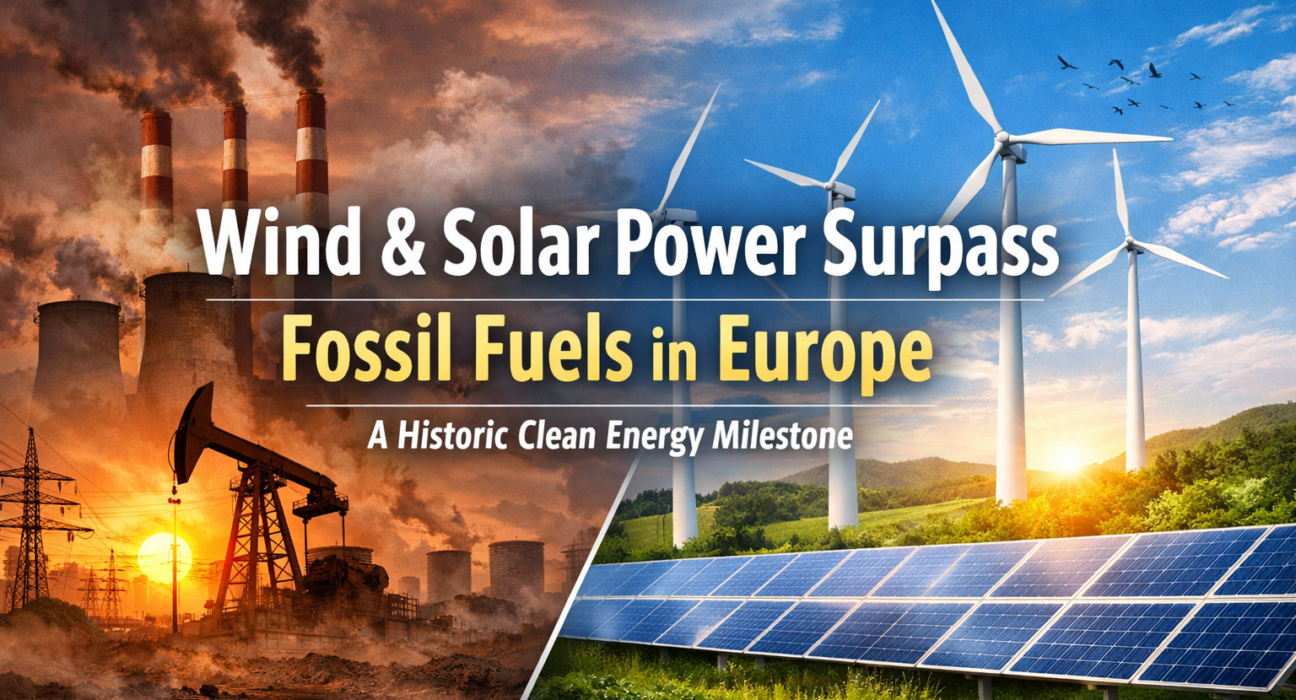
A Historic Clean Energy Milestone: Wind and Solar Overtake Fossil Fuels in Europe
In a powerful sign that the global fight against climate change is gaining momentum, Europe has reached a historic energy milestone. For the first time, electricity generated from wind and solar power has surpassed electricity produced from fossil fuels such as coal and gas. This shift represents a significant step toward a cleaner, more sustainable future and demonstrates how rapidly renewable energy technologies are transforming the global energy landscape.
For decades, fossil fuels have been the backbone of electricity generation across the world. Coal, oil, and natural gas powered industries, lit homes, and fueled economic growth. However, these sources also released large amounts of carbon dioxide and other greenhouse gases into the atmosphere, contributing heavily to global warming and environmental degradation. Governments, scientists, and environmental organizations have long warned that reducing reliance on fossil fuels is essential to limit climate change and protect the planet.
Europe’s Achievement In Solar And Wind Energy
Europe’s latest achievement shows that change is not only possible but already happening. According to recent energy reports, wind and solar energy together produced more electricity than fossil fuel plants in several European countries over recent months. The growth of renewable energy has been driven by large investments, supportive government policies, and technological advancements that have made clean energy more efficient and affordable than ever before.
Wind power has played a particularly important role in this transformation. Countries across Europe have invested heavily in both onshore and offshore wind farms. Massive turbines now stand across open landscapes and along coastlines, capturing the power of natural winds and converting it into electricity. Offshore wind farms, located in the seas surrounding Europe, have been especially productive because winds over water tend to be stronger and more consistent.
Solar energy has also experienced remarkable growth. Solar panels installed on rooftops, commercial buildings, and solar farms are now generating enormous amounts of electricity during daylight hours. In many European cities, households and businesses are installing solar panels to produce their own energy and reduce electricity bills. This shift toward decentralized energy production has helped accelerate the adoption of renewable power.
Diffrent Reasons For Goverment Policy
Another reason behind this milestone is the increasing efficiency of renewable technologies. Modern wind turbines are significantly larger and more powerful than those built just a decade ago. Similarly, advances in solar panel technology have improved their ability to capture sunlight and convert it into electricity. As production costs fall and efficiency rises, renewable energy has become one of the most competitive sources of electricity in many regions.
Government policy has also played a major role. European nations have introduced ambitious climate targets aimed at achieving carbon neutrality in the coming decades. These policies include financial incentives for renewable energy projects, carbon pricing mechanisms, and regulations encouraging the gradual phase-out of coal-fired power plants. Such initiatives have created a strong push for energy companies to invest in cleaner alternatives.
Beyond environmental benefits, the shift toward renewable energy is also creating new economic opportunities. The renewable energy sector has generated thousands of jobs in areas such as engineering, manufacturing, construction, and maintenance. Wind turbine technicians, solar panel installers, and renewable energy engineers are among the fastest-growing professions in many countries. As demand for clean energy continues to rise, these industries are expected to expand even further.
Renewable Energy And Their Use
The transition to renewable energy also improves energy security. Unlike fossil fuels, which must often be imported from other regions, wind and sunlight are naturally available resources. By relying more on domestic renewable energy sources, countries can reduce dependence on imported fuels and stabilize their energy supply.
Despite this positive milestone, experts emphasize that the journey toward a fully clean energy system is not yet complete. Challenges remain, including the need for better energy storage technologies and stronger electricity grids capable of handling variable renewable power. Since wind and solar generation depends on weather conditions, energy storage systems such as large batteries are essential to ensure a steady supply of electricity.
Nevertheless, the progress achieved so far provides strong optimism for the future. Europe’s renewable energy success demonstrates that with the right combination of innovation, investment, and policy support, a cleaner energy system is achievable. Other regions around the world are watching closely and adopting similar strategies to accelerate their own energy transitions.
Ultimately, this milestone represents more than just a shift in electricity statistics. It symbolizes a turning point in humanity’s relationship with energy and the environment. By harnessing natural forces like wind and sunlight, societies are beginning to build a sustainable energy system that can power economies while protecting the planet for future generations.