








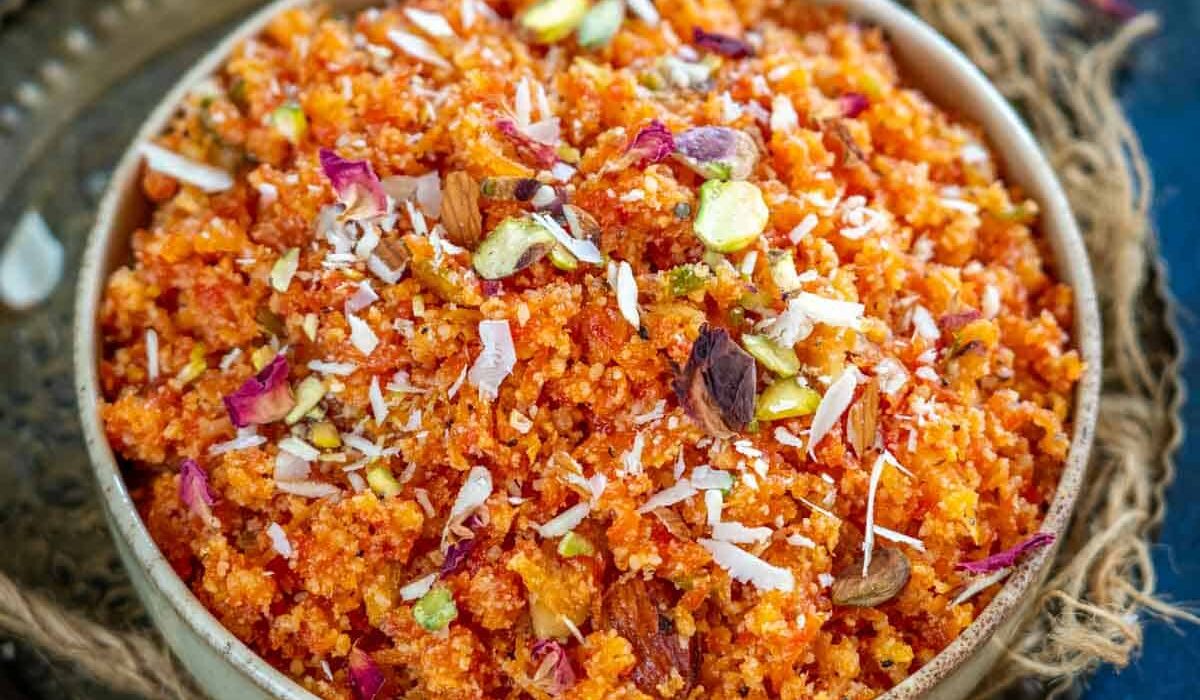
The sight of rich, crimson gajar ka halwa—garnished with pistachios and radiating a comforting warmth—is synonymous with winter in North India. This beloved carrot-based pudding, simmered in milk and ghee, is far more than just a seasonal dessert; it is a delicious testament to the cultural and culinary fusion that defines the subcontinent.
The story of gajar ka halwa is a journey that starts not in India, but in the heart of the Middle East, and then finds its true identity under the patronage of the Mughals.
The Halwa Heritage: A Taste of Persia
The very name of the dish gives a clue to its origin. “Halwa” is an Arabic word meaning “sweet” or “sweet confection.” Halwas, typically dense, sweet puddings made from semolina (sooji), flour, or nuts, were a popular feature of Persian and Central Asian cuisine.
When the Mughal Empire established its reign in India, it brought with it a sophisticated, lavish culinary tradition. This Mughlai cuisine was a magnificent blend of Indian spices and techniques with the rich ingredients and styles of Central Asia and Persia.
The Carrot’s Journey to India
The pivotal moment in the creation of gajar ka halwa wasn’t the cooking technique, but the introduction of the main ingredient: the carrot.
-
Before the Mughals, the carrots widely available in India were likely the thinner, darker, and more purple or black varieties.
-
It was during the Mughal era that traders and emperors brought the red or orange, sweeter, and thicker Persian/European carrots to the Indian subcontinent. These new carrots were softer and sweeter, making them perfectly suited for slow cooking in milk.
The innovative royal kitchens of the Mughals combined the traditional halwa concept (slow-cooking a vegetable or grain with fat and sweetener) with this newly introduced, vibrant red carrot, leading to the birth of gajar ka halwa. The dish immediately fit the Mughlai palate, which favored richness, aromatic spices (like cardamom), and generous use of milk solids (khoya) and ghee.
A Regional Adoption: The Punjabi Connection
While it was born in the imperial kitchens, gajar ka halwa found its true home in the homes and hearths of Punjab and the surrounding North Indian regions.
-
The cold climate of Punjab made the rich, warming, and calorie-dense dish a perfect winter necessity.
-
The region’s abundance of high-quality milk and desi ghee meant the ingredients needed to prepare the creamy confection were readily available, allowing it to move from a royal delicacy to a common winter comfort food.
-
In some parts, particularly Punjab, the dish is also lovingly referred to as “Gajrela,” a nod to its carrot base.
Today, gajar ka halwa continues to be a star dessert during winter festivals, weddings, and cold evenings, serving as a delicious and fragrant link to centuries of culinary history and cross-cultural exchange. It stands as a perfect example of how foreign culinary influences, when embraced by local ingredients and traditions, can evolve into an indelible part of the national heritage.