


When a Nation Paused to Breathe Together: India’s 77th Republic Day
On the morning of 26 January, as the winter fog slowly lifted over New Delhi, something quietly powerful unfolded. Streets were cleaner than usual, flags fluttered from balconies, and televisions across millions of homes were tuned to a single sight: India celebrating its 77th Republic Day. For a few hours, the country seemed to move in one rhythm — proud, reflective, and hopeful.
At Kartavya Path, the parade began with precision, colour, and purpose. But beyond the perfectly aligned marching boots and the disciplined formations lay a deeper story — one of people, progress, and shared identity.
For the soldiers marching down the boulevard, Republic Day was not just a ceremonial duty. Many carried memories of long deployments, harsh terrains, and families watching from afar. As they saluted the President and the tricolour rose against the pale winter sky, their expressions revealed something more than discipline — they revealed devotion. In that salute lived countless unseen sacrifices.
Cultural Unity At Republic Day Parade
The cultural performances that followed transformed the parade route into a moving canvas of India itself. Dancers from different states, dressed in vibrant traditional attire, brought regional stories to life — stories of harvest, folklore, resilience, and joy. Each step, each beat of the drum, reminded viewers that India’s strength lies in its diversity, stitched together by a shared constitutional promise.
For many performers, this moment was the culmination of years of practice and quiet dreams. Some were students performing on a national stage for the first time; others were folk artists representing traditions passed down through generations. When their performances ended, smiles broke through nervous concentration — a human moment that resonated far beyond the parade ground.
Republic Day is also about looking outward, and this year’s celebrations carried a subtle but meaningful diplomatic note. The presence of international representatives, including leaders and envoys from partner regions such as the European Union, symbolised India’s growing role on the global stage. These moments — a handshake, a shared smile, a seated conversation — may seem small, but they speak of trust, cooperation, and a future shaped through dialogue rather than distance.
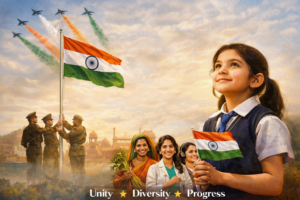

Inside Indian homes, the day unfolded in deeply personal ways. Children watched the parade while asking questions about tanks, aircraft, and medals. Parents explained the meaning of the Constitution, sometimes recalling their own school days when they first learned about Dr. B.R. Ambedkar and the framing of the republic. In many households, the parade played in the background while breakfast was prepared — a quiet tradition passed from one generation to the next.
In schools across the country, tricolour hoisting ceremonies took place, often led by students themselves. For young minds, Republic Day is not yet about geopolitics or policy — it is about belonging. Singing the national anthem with friends, holding a small paper flag, or performing a patriotic skit becomes their first emotional connection to citizenship.
The parade’s tableaux told stories of development and aspiration — rural transformation, women-led initiatives, technological innovation, and environmental responsibility. But behind these displays are real people: farmers experimenting with new methods, women stepping into leadership roles, young innovators building solutions with limited resources. Republic Day gives these everyday heroes a moment in the national spotlight.
As fighter jets roared overhead in a perfectly timed flypast, many spectators instinctively looked up, some shielding their eyes from the sun, others recording the moment on their phones. That sound — loud, fleeting, and thrilling — carried a message of security and confidence. It reassured citizens that while the nation celebrates peace, it remains vigilant in protecting it.
Yet Republic Day is not only about pride; it is also about pause. It invites reflection on how far the nation has come and how far it still needs to go. Conversations over tea touched on education, employment, equality, and opportunity. The Constitution, after all, is not a finished promise — it is a living one, renewed every year through action and accountability.
As the celebrations wound down, flags were carefully folded, streets slowly returned to their usual pace, and the nation exhaled. But the feeling lingered. Republic Day left behind something intangible yet powerful — a reminder that despite differences in language, region, or belief, there exists a shared commitment to the idea of India.
In a world often overwhelmed by conflict and division, India’s 77th Republic Day stood as a quiet affirmation: that unity does not mean sameness, and pride does not require exclusion. It is built instead on shared values, collective memory, and the courage to imagine a better tomorrow — together.