


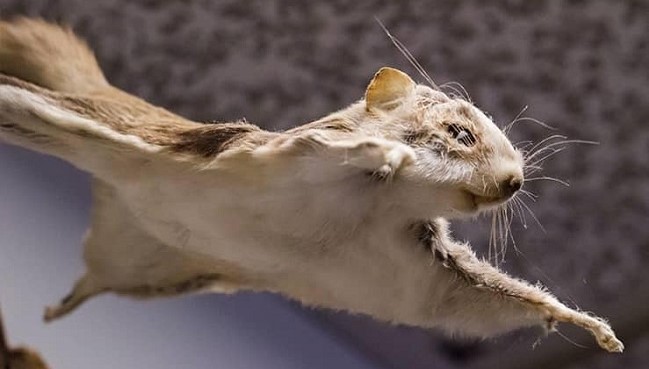
Deep in the misty rainforests of Arunachal Pradesh’s Namdapha National Park lurks one of India’s most elusive treasures: the Namdapha Flying Squirrel (Biswamoyopterus biswasi), a critically endangered gliding marvel discovered in 1981 and rarely glimpsed since. This nocturnal acrobat, with its silky grey fur, massive dark eyes, and wing-like patagium spanning up to 1.5 meters, soars between ancient trees like a living phantom, embodying the wild, untamed spirit of Northeast India’s biodiversity hotspots.
Native exclusively to the Indo-Myanmar border’s tropical evergreen forests at elevations of 100-350 meters, this squirrel thrives on a gourmet diet of fruits, insects, and bark, nesting in tree hollows during the day. Its gliding prowess, covering 100 meters in a single graceful leap, helps it evade predators in the dense canopy, but habitat fragmentation from logging and infrastructure has shrunk its world to perilously small patches. With fewer than 250 individuals estimated worldwide, conservation heroes at Namdapha patrol tirelessly, planting native dipterocarps and curbing poaching to safeguard its realm.
Yet hope glides on resilient wings. Community-led eco-tourism in Changlang district empowers locals as guardians, while camera traps capture fleeting glimpses that fuel global awe. This squirrel’s story mirrors India’s 73 critically endangered species, from the pangolin’s armored mystery to the Nilgiri Tahr’s mountain grace, reminding us that protecting these exotics preserves our planet’s irreplaceable wonder.