









A Bump in Growth: What Goldman Sachs Said
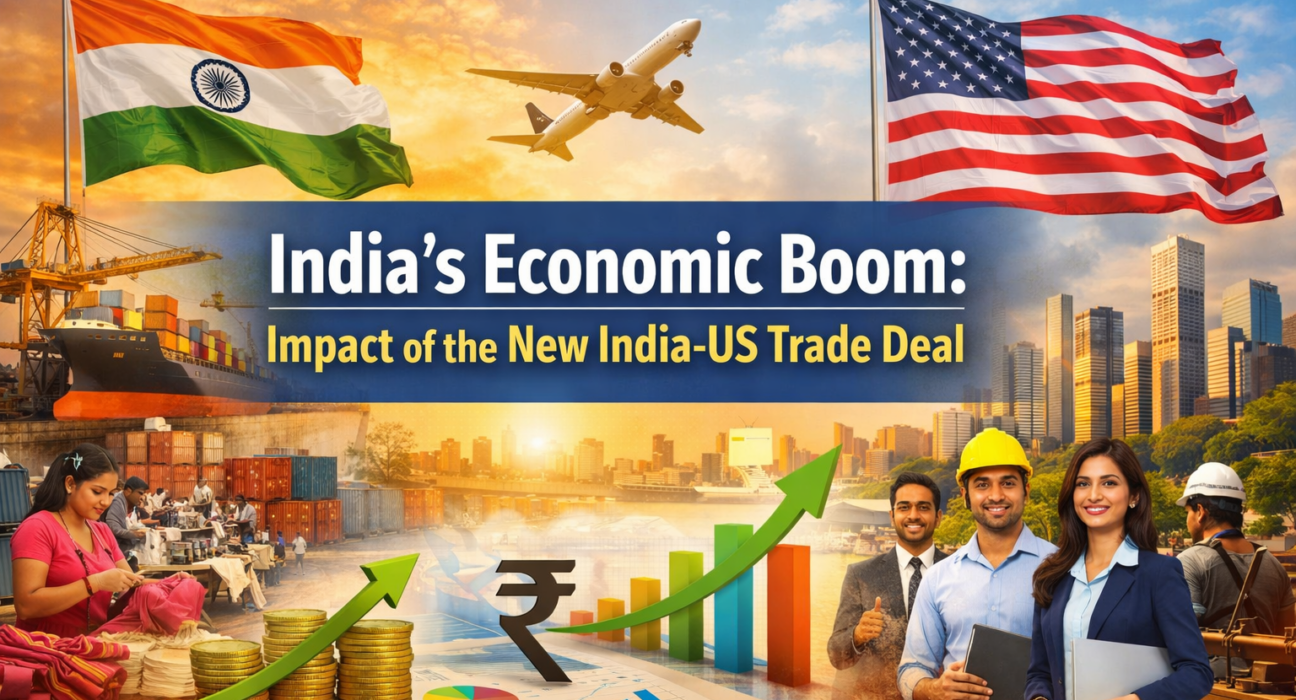
Goldman Sachs, one of the world’s leading global investment banks, now expects India’s real Gross Domestic Product (GDP) a key measure of economic health to grow at 6.9 % in 2026, up from earlier, slightly lower estimates. This revision might seem technical, but an increase of even a fraction of a percentage point translates into tens of billions of additional economic output for a country of India’s size.
Why the upgrade? The firm points to a reduced tariff burden on Indian exports to the United States, thanks to the new trade agreement, as a key driver of this stronger outlook. Lower trade barriers make Indian goods more competitively priced in the world’s largest economy a boost for exporters and the industries they support.
Goldman Sachs estimates that this tariff reduction could add about 0.2 percentage points to India’s annual GDP a meaningful contribution when set against broader economic activity.
Trade Benefits That Touch Real Lives
Stronger Market Access for Key Sectors
Labour-intensive sectors like textiles, apparel, gems and jewellery, engineering products, and leather goods are expected to benefit significantly. These industries employ millions of workers from skilled artisans to factory workers many in smaller towns and rural districts. Expanded access to the US market can mean more orders, more jobs, and steadier income for families connected to these sectors.
More Export-Driven Growth and Foreign Investment
Export competitiveness isn’t just about selling goods it’s about building confidence. With the trade deal easing tariff concerns, analysts see the potential for renewed foreign institutional investment (FII) and stronger foreign direct investment (FDI) flows. This is critical because foreign capital often helps fund infrastructure projects, manufacturing growth, and technology transfer. Investors and firms signal their belief in India’s long-term prospects by bringing in fresh capital.
Narrowing the Current Account Deficit
A country’s current account deficit (CAD) measures how much it imports goods, services, and capital compared to what it earns from exports and foreign incomes. Goldman Sachs now anticipates India’s CAD could narrow to around 0.8 % of GDP, a healthier balance that reduces vulnerability to sudden shifts in global markets. A stronger external position often strengthens confidence in the Indian rupee and lowers pressure on foreign exchange reserves.
What This Means for Everyday Indians
Jobs and Wages
Export-linked industries often hire large numbers of people, especially in labour-intensive or semi-skilled roles. Better access to foreign markets could lead to more orders and increased employment from textile hubs in Tiruppur to jewellery manufacturing clusters in Surat. That, in turn, can provide more stable income prospects for workers and their families.
Regional Growth Beyond Big Cities
Increased exports and foreign investment can stimulate growth in smaller towns and second-tier cities as well places where manufacturing and export-oriented units are significant employers. This helps reduce pressure on big cities and distribute economic opportunities more evenly.
Consumers and Inflation
While trade deals focus on exports, they also influence what people pay at home. Competitive pricing on imports and increased productivity can help keep inflation in check. Coupled with recent Reserve Bank of India (RBI) measures aimed at boosting liquidity and moderating prices, consumer purchasing power can improve.
Market Confidence and Investment Sentiment
The economic response has shown up clearly in market sentiment too. Following news of the deal, Indian equity markets have rallied, with analysts highlighting strong prospects in sectors like banking, financial services, chemicals, and export-oriented manufacturing. This positive mood among investors can help lower the cost of capital for businesses making it cheaper to borrow and expand operations.
Larger Strategic Implications
Beyond immediate figures, this trade deal highlights India’s growing clout in global trade and geopolitics. It increasingly positions India as a valuable player in global supply chains not just a domestic market with deeper ties to the world’s largest economy. Over time, this can attract more multinational firms to set up manufacturing and development centres in India.