


From the Brink to a Breakthrough: India’s Rhino Conservation Triumph in 2025
In the lush grasslands and riverine forests of Assam, a story of ecological resilience and human determination has unfolded — one that captures the imagination and inspires hope for wildlife conservation across the globe.
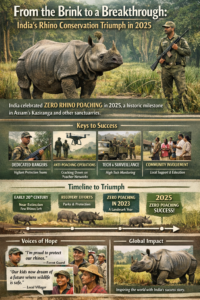
In 2025, for the second time on record, India’s rhino heartland particularly in and around Kaziranga National Park and other protected areas in Assam reported zero cases of rhino poaching. Officials, conservationists, forest guards, volunteers, and local communities all celebrated this momentous achievement, which reflects years of relentless effort to protect one of the world’s most iconic and once critically endangered mammals.
A Species Once on the Edge
The story of the greater one-horned rhinoceros (Rhinoceros unicornis) is nothing short of astonishing. Two centuries ago, rampant hunting, habitat loss, and exploitation pushed this species across northern India and neighboring regions toward the brink of extinction. By the early 20th century, only a handful remained in pockets like Kaziranga a stark reminder of humanity’s impact on nature.
Over decades, India’s conservation narrative shifted from loss and decline to recovery and protection. Today, Assam is home to around 80% of the world’s one-horned rhino population, with thousands thriving in parks like Kaziranga and Pobitora Wildlife Sanctuary. This dramatic turnaround is one of the most successful wildlife revival stories in the world.
Zero Poaching in 2025: What It Means
The announcement that not a single rhino was poached in Assam during 2025 was met with both pride and relief. It’s not just a statistic it’s a symbol of what sustained protection efforts can achieve. For a species historically targeted for its horn driven by illegal wildlife markets and myths around its medicinal value reaching true zero poaching is a milestone worth celebrating. This achievement came on the heels of another zero-poaching year in 2023, which showed that the success was not a one-off anomaly but part of a positive trend in wildlife protection.
Decades of Effort Behind a Single Number
Dedicated Forest Officials and Rangers
From daily patrols in dense grasslands to coordinated anti-poaching raids, forest guards have been on the frontlines. These men and women often work in challenging conditions facing sweltering heat, monsoon flooding, and the physical demands of tracking and protecting wildlife. Their vigilance has been a cornerstone of Assam’s success.
Targeted Anti-Poaching Operations
State authorities launched strategic initiatives like Operation Falcon, a multi-agency campaign aimed at dismantling poaching networks and intercepting illegal wildlife trade rings. Through coordinated intelligence sharing, arrests of poachers, and disruption of organized syndicates, authorities struck at the root of wildlife crime before it could happen.
Technology and Coordination
Modern surveillance including patrol grids, tracking devices, and digital monitoring has enhanced the ability to detect and deter poaching attempts. Combined with tighter enforcement of wildlife protection laws, these tools have helped keep potential threats at bay.

Why This Matters Beyond Assam
A Model for Conservation
Assam’s story shows that even endangered species hunted for centuries can make comebacks when conservation efforts are well-resourced, inclusive, and sustained. This can inspire other regions battling wildlife crime, from elephants to big cats to other rhino species.
Protecting Biodiversity
Rhinos are more than charismatic megafauna; they are ecosystem engineers. Their grazing helps shape grassland dynamics and supports other species. Protecting them strengthens entire ecosystems and in turn, the other species that depend on those systems.
Human-Nature Harmony
At a time when environmental news often highlights crisis, stories like this remind us that human action can be a force for regeneration. When governments, NGOs, scientists, and communities align, positive outcomes are possible.
Challenges Still Ahead
While the zero-poaching news is cause for celebration, conservation is a dynamic, ongoing process. Researchers and forest managers still monitor threats like habitat fragmentation, climate change impacts (such as annual floods in Kaziranga), and tensions between wildlife and growing human populations. Conservation success is not static it requires constant care, adaptation, and vigilance. Additionally, conserving wildlife also means protecting their habitats in the long term from forests to grasslands and ensuring that future generations inherit a world rich in biodiversity.
For more information on kaziranga:-
Where Progress Meets Nature: Kaziranga’s Elevated Corridor and the Vande Bharat Journey