








A Big Vision for Indian Sports: The Khelo India Mission
In the Union Budget 2026–27, Finance Minister Nirmala Sitharaman announced a new 10-year Khelo India Mission with the objective of transforming India’s sports ecosystem from grassroots talent identification to elite performance and sports industry growth.
Mission goals include:
-
Integrated Talent Development: Build a seamless pathway for athletes from grassroots to elite levels through structured training centers (foundational, intermediate, elite).
-
Coach & Support Staff Growth: Systematic development and professionalisation of coaches, physiotherapists, sports psychologists, nutritionists, and support personnel.
-
Sports Science & Technology: Integrating advanced sports science, data analytics, and medical support to improve performance and training outcomes.
-
Competitions & Culture: Promoting leagues and structured competitions nationwide to foster sporting culture and give athletes frequent competitive exposure.
-
Infrastructure Development: Expanded infrastructure for training and competitions across regions, aiming to reduce urban-rural gaps in facilities.
This mission marks a shift from short-term talent hunts toward a sustained and connected development model, linking grassroots efforts with pathways to international success.
Major Funding Boost for Sports
The Ministry of Youth Affairs & Sports saw a significant increase in funding in Union Budget 2026–27, with the total outlay rising by more than ₹1,133 crore compared to the previous year, reaching approximately ₹4,479.88 crore.
Key allocations include:
-
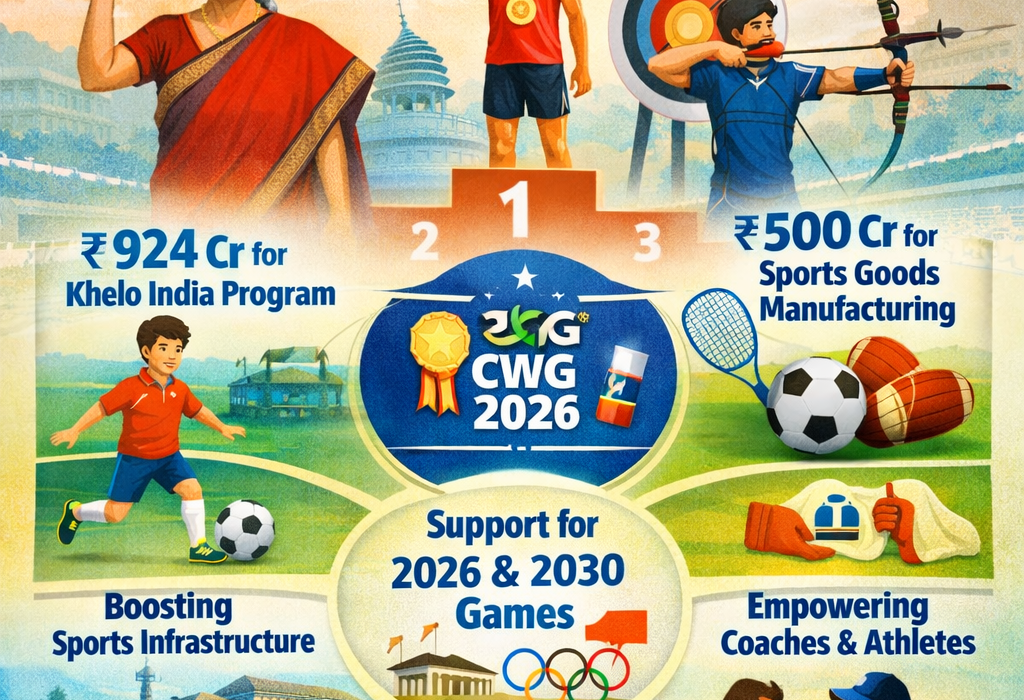
Khelo India programme: Around ₹924 crore dedicated to the flagship scheme.
-
Sports Authority of India (SAI): Increased funding to support national training camps and athlete development.
-
Sports goods manufacturing: A first-time allocation of ₹500 crore to promote domestic manufacturing, research, and innovation in sports equipment and materials.
-
Commonwealth Games support: Assistance for India’s participation in the 2026 Commonwealth Games was increased (e.g., from ₹28 crore to ₹50 crore) to boost preparation and performance.
These investments reflect a strategic emphasis on treating the sports sector as both a performance engine and an economic growth area.
Sports Goods as an Industry Opportunity
For the first time, the budget allocated ₹500 crore specifically for the sports goods manufacturing sector, recognizing the economic potential of manufacturing high-quality, affordable sports equipment in India. This supports the government’s broader “Make in India” agenda, encourages research and innovation, and could generate jobs across manufacturing, design, and technology sectors.
Experts see this as a push to make India a global hub for sports goods manufacturing, expanding exports and reducing dependence on imports.
Alignment with Global Sporting Aspirations
The enhanced sports budget and new mission align with India’s long-term global sporting goals, such as:
-
Hosting the 2030 Commonwealth Games (in Ahmedabad).
-
Pursuing the opportunity to host the 2036 Olympic Games.
Officials and sports leaders see the budget as a foundation for India’s evolution into a sporting powerhouse not just in athlete performance but also in hosting, infrastructure, and industry innovation.
Broader Social & Economic Impact
Beyond elite sport, the budget’s sports focus supports:
-
Youth employment and skill development in coaching, sports science, and management.
-
Expanded opportunities for regional talent, particularly through competitions and grassroots initiatives.
-
Stronger sports culture across schools, colleges, and communities.
Sports Goods Manufacturing Push
-
For the first time, a dedicated ₹500 crore allocation was made for sports goods manufacturing, research, and innovation, signalling a push to make India a global hub for high-quality sports equipment supporting domestic industry and potential exports.
-
This support complements broader plans to integrate sports with employment and manufacturing, creating jobs beyond just athletes including in design, production, and supply chains.
Economic and Social Impact
Experts and industry representatives have highlighted that the budget’s sports focus is not just about medals it’s part of economic growth, job creation, and youth engagement, especially in areas such as:
-
-
Sports science and technology integration
-
Competitive leagues and structured grassroots competitions
-
Employment in coaching, management, sports medicine, and data analytics
— helping build a holistic sports ecosystem with economic outputs.
-
Summary: Why This Matters
A 10-year vision for systematically developing sports talent and infrastructure.
Record funding increases for sport—strengthening programmes, training, and manufacturing.
Support for India’s global sporting ambitions.
New economic opportunities and jobs in sports science, coaching, manufacturing, and events.