








The Taj Mahotsav At Agra Begins
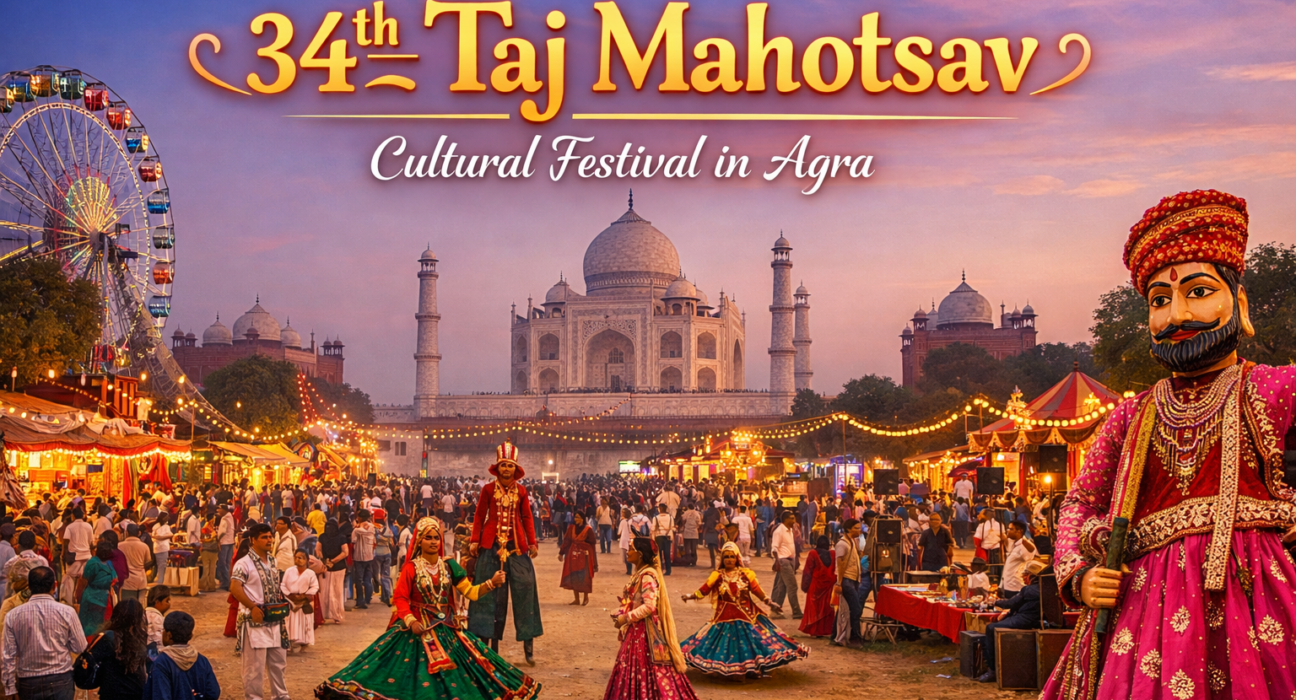
The historic city of Agra has once again come alive with colour, music and celebration as the 34th edition of the Taj Mahotsav begins, drawing visitors from across India and abroad. Set against the timeless beauty of the Taj Mahal, the annual cultural festival is more than just an event it is a heartfelt tribute to India’s artistic soul.
Organised in the vibrant state of Uttar Pradesh, Taj Mahotsav has grown over the years into one of the country’s most anticipated cultural gatherings. This year’s edition feels particularly special. With expanded exhibition spaces, an enriched lineup of performances and a renewed focus on supporting local artisans, the festival reflects both tradition and transformation.
From the moment visitors step into the festival grounds near the banks of the Yamuna River, they are welcomed by a riot of colours brightly decorated stalls, intricate handicrafts, handwoven textiles and the irresistible aroma of regional delicacies. Craftspeople from various states have travelled long distances to showcase their skills. For many of them, Taj Mahotsav is not just a marketplace but a platform of recognition and dignity.
The Artist Work Reminiscent Different Art Product
Artisans proudly display hand-embroidered fabrics, marble inlay work reminiscent of Mughal artistry, brassware, pottery, and delicate jewellery. Visitors often pause to watch live demonstrations hands skilfully carving, weaving or painting offering a rare glimpse into crafts that have been passed down through generations. In a fast-paced digital age, these moments feel grounding, reminding people of the value of patience, precision and heritage.
The festival’s cultural performances are equally captivating. Each evening, the main stage transforms into a celebration of rhythm and melody. Classical dance forms such as Kathak and Bharatanatyam share space with folk performances from Rajasthan, Punjab and the Northeast. Renowned singers and emerging talents alike enthrall audiences with soulful renditions that echo across the open-air venue. Families sit together under the night sky, children clapping along, elders nodding in appreciation an atmosphere that feels intimate despite the large crowds.
Food lovers find their own paradise at Taj Mahotsav. Stalls serve everything from traditional Mughlai dishes to regional street food. Visitors savour piping hot kebabs, fragrant biryanis, chaat bursting with flavour, and sweet delights like jalebi and petha Agra’s famous confection. The culinary section not only satisfies appetites but also tells a story of India’s diversity through taste.
Huge Spectacle Visionary
Beyond the spectacle, the festival carries a deeper economic and social significance. For small-scale artisans and performers, it offers direct access to customers, reducing reliance on middlemen. Many craftsmen report that sales during the festival sustain their families for months. In recent years, organisers have also introduced digital payment facilities and promotional initiatives to help artisans adapt to changing consumer habits.
This year’s expanded venue layout has made the experience more comfortable for visitors. Wider walkways, better seating arrangements and improved lighting create a welcoming environment. Special zones for children, interactive workshops and heritage walks have added new dimensions to the celebration, making it engaging for all age groups.
Tourism, too, receives a significant boost. Hotels, local transport services and small businesses in Agra benefit from the influx of visitors. Tourists often combine their festival visit with a trip to the Taj Mahal and other historical monuments, creating a holistic cultural journey. The synergy between heritage tourism and contemporary celebration strengthens Agra’s identity as a city where history and modern vibrancy coexist.
The Reason Of Grand Taj Mahotsav
What makes Taj Mahotsav truly heartwarming is its spirit of unity. In a country as diverse as India, festivals like this become shared spaces where differences dissolve. Languages, costumes and customs blend harmoniously, creating an atmosphere of mutual respect and curiosity. A visitor from the south might admire a Kashmiri shawl; a tourist from abroad might attempt local dance steps; a child might ask an artisan how a clay pot takes shape. These small interactions build bridges that go beyond commerce.
The opening ceremony this year struck an emotional chord, with cultural troupes performing a medley that celebrated India’s journey through time from ancient traditions to contemporary creativity. The applause that followed felt like a collective acknowledgement of resilience and pride.
As the 34th Taj Mahotsav unfolds over the coming days, it stands as a reminder that culture is not static. It evolves, adapts and flourishes when given space and support. In the shimmering reflection of the Taj Mahal and the gentle flow of the Yamuna, the festival carries forward a message of continuity honouring the past while embracing the present.
For Agra, for the artisans, and for every visitor who walks through its colourful lanes, Taj Mahotsav is more than a celebration. It is a living testament to India’s enduring creativity and shared heritage an experience that lingers in memory long after the lights dim and the music fades.