


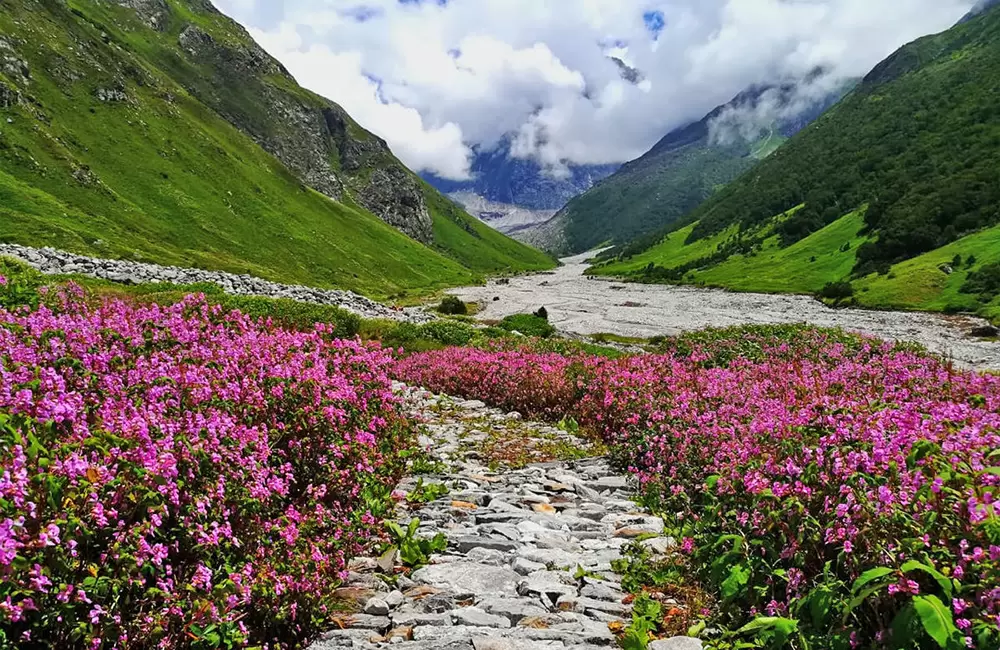
Nestled high in the Western Himalayas of Uttarakhand’s Chamoli district, the Valley of Flowers National Park unfolds as a breathtaking tapestry of over 500 species of alpine flowers, transforming into a riot of colors from vibrant blues and purples to fiery reds and yellows during the monsoon season (June to October). Discovered in 1931 by mountaineer Frank S. Smythe, who poetically called it a “valley of peace and perfect beauty,” this 87.5 sq km UNESCO World Heritage Site (since 2005) and core zone of the Nanda Devi Biosphere Reserve captivates trekkers, botanists, and nature lovers with its pristine meadows, cascading waterfalls, and snow-capped peaks soaring up to 6,675 meters.
The valley’s magic lies in its seasonal metamorphosis: as snow melts, rare blooms like the sacred Brahma Kamal, Cobra Lily, Blue Poppy, and Orchids carpet the 5 km long, 2 km wide floor at 3,200-3,700 meters elevation. Accessible via a moderate 11-13 km trek from Govindghat through Ghangaria (permit required), the journey crosses the Pushpavati River amid coniferous forests of rhododendron, birch, and fir. Wildlife adds thrill spot Asiatic black bears, snow leopards, musk deer, blue sheep, and over 80 bird species like the Himalayan Monal pheasant while eco-zones from sub-alpine shrubs to moist herbaceous fields showcase biodiversity unique to the Zanskar-Himalayan transition.
Conservation shines here: notified as a national park in 1982 under the Wildlife Protection Act, strict regulations limit visitors to 600 daily, protecting endangered flora and fostering research. Nearby Hemkund Sahib Gurudwara enhances spiritual allure for pilgrims. Best visited July-August for peak bloom, this hidden gem offers not just scenic splendor but profound tranquility, reminding us of nature’s resilient artistry amid climate challenges.