


Nature’s Quiet Comeback: How Wildlife Is Reclaiming Lost Ground
For decades, conversations about nature and wildlife have largely been dominated by grim headlines — vanishing species, shrinking forests, polluted oceans, and ecosystems pushed to the brink. Yet, beneath this heavy narrative, something quieter and far more hopeful has been unfolding. Across different parts of the world, nature is showing a remarkable ability to heal when given even a small chance. Recent developments reveal a powerful truth: conservation works.
One of the most encouraging signs of this recovery is the resurgence of species once considered close to extinction. Among the most symbolic of these success stories is the green sea turtle.
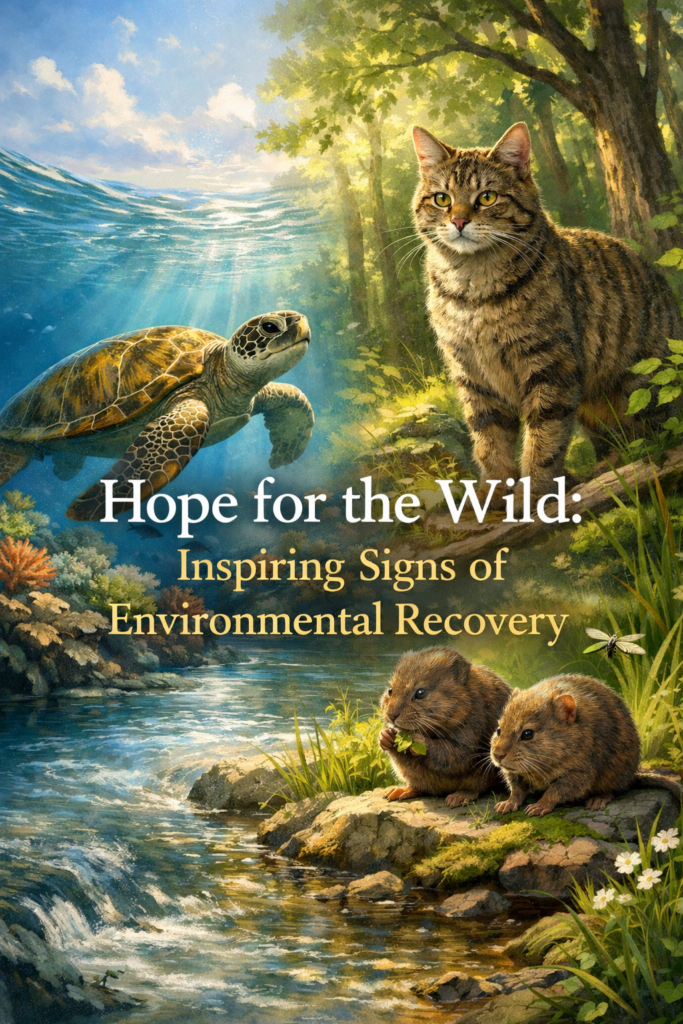
The Return of the Green Sea Turtle
Green turtles have roamed the oceans for over 100 million years, surviving mass extinctions that wiped out dinosaurs. Yet in recent decades, human activity pushed them dangerously close to extinction. Overharvesting, plastic pollution, fishing nets, coastal development, and climate change devastated turtle populations worldwide.
Today, thanks to sustained conservation efforts, green turtles are slowly returning. Protected nesting beaches, bans on turtle hunting, improved fishing practices, and global awareness campaigns have made a real difference. In many coastal regions, conservationists are reporting increased nesting activity and higher hatchling survival rates.
What makes this recovery particularly inspiring is its long-term nature. Green turtles take decades to mature, meaning the positive results seen today are the outcome of patient work that began many years ago. Their return is a reminder that environmental protection is not instant but it is deeply rewarding.
Small Mammals, Big Impact: Wildcats and Water Voles
While sea turtles capture global attention, some of the most meaningful environmental victories are happening quietly on land. In parts of Europe and the UK, species like wildcats and water voles once pushed out by habitat loss and pollution are beginning to thrive again.
Wildcats, elusive and highly sensitive to environmental disruption, had almost vanished from several regions due to deforestation and human expansion. Restoration of woodlands, legal protections, and better land management have allowed these animals to return. Their presence is a strong indicator of ecosystem health, as wildcats require rich, balanced habitats to survive.
Similarly, the recovery of water voles, often called “nature’s engineers,” marks a significant win for freshwater ecosystems. Once devastated by polluted rivers and invasive species, water voles are now reappearing in restored wetlands and clean waterways. Their burrowing improves riverbanks, boosts biodiversity, and supports other wildlife proving that saving one species often helps many others.
Human Effort at the Heart of Success
Behind every wildlife comeback is sustained human effort. Conservationists monitoring nesting sites, local communities protecting habitats, scientists tracking populations, and policymakers enforcing environmental laws all play vital roles.
In many cases, local communities have been key drivers of success. Coastal villages now protect turtle nests instead of harvesting eggs. Farmers adopt wildlife-friendly practices. Volunteers restore wetlands and plant native vegetation. These actions prove that environmental protection does not have to conflict with human livelihoods it can enhance them.
A Reason for Hope
In a world often overwhelmed by environmental crises, these positive developments matter deeply. They remind us that nature is not only fragile but also resilient. Each nesting turtle, each returning wildcat, and each thriving riverbank tells a story of recovery and of responsibility.
The message is clear: when humans choose protection over exploitation, nature responds. These quiet victories may not always make front-page headlines, but they represent some of the most important progress of our time proof that a healthier relationship between people and the planet is not just necessary, but achievable.
Why These Recoveries Matter
These stories are not just about animals returning; they represent entire ecosystems healing. When turtles nest again, beaches become healthier. When wildcats return, forests regain balance. When water voles thrive, rivers grow cleaner and more resilient.
Importantly, these successes also challenge a growing sense of environmental hopelessness. They show that while damage can be severe, it is not always permanent. Nature has an extraordinary capacity for recovery when human pressure is reduced and thoughtful conservation is applied.