








Rural women growing agriculture sector
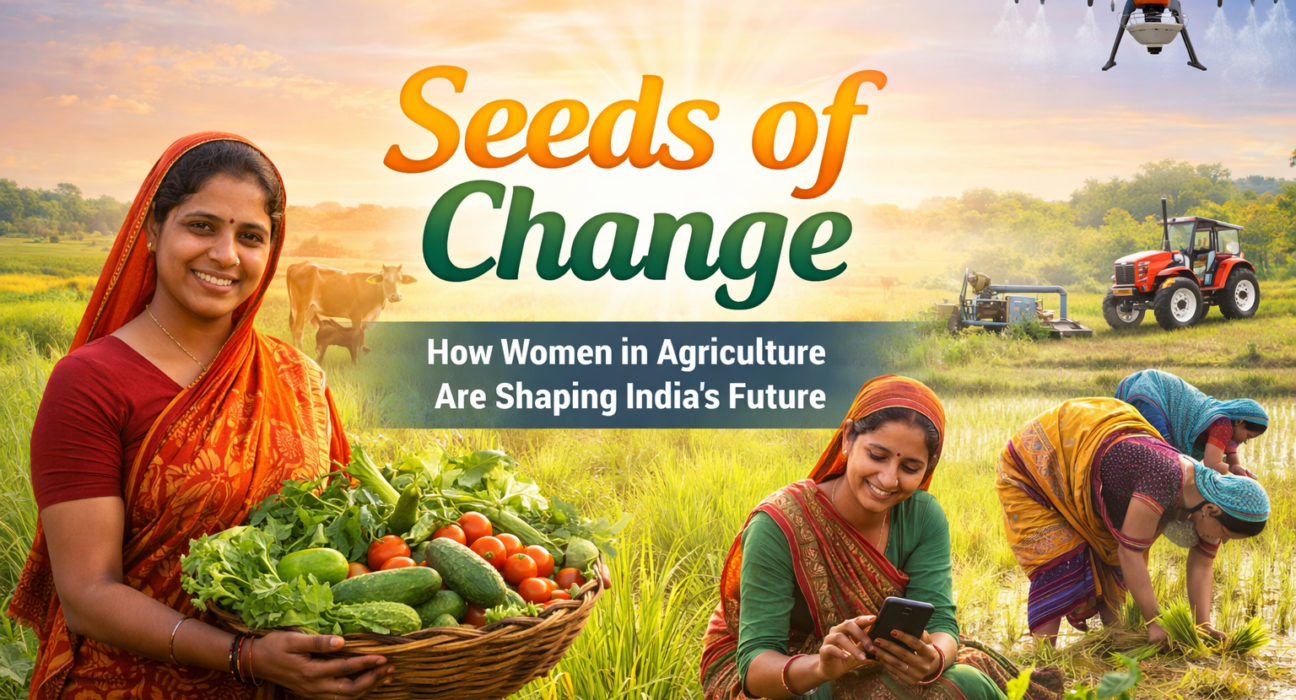
In the quiet agriculture fields of rural India, long before the sun rises, millions of women begin their day. They sow seeds, tend crops, manage livestock, and ensure that food reaches households across the country. Yet, for decades, their contributions have remained largely invisible unrecognized in policies, underrepresented in leadership, and often overlooked in conversations about agricultural growth. That narrative, however, is beginning to change.
Recently, India took a significant step forward by hosting a global conference focused on women in agri-food systems. This event brought together policymakers, researchers, entrepreneurs, and farmers from around the world to shine a spotlight on the critical role women play in agriculture. More than just a formal gathering, the conference became a platform for voices that are often unheard, stories that are rarely told, and ideas that have the power to transform rural economies.
Women form nearly half of India’s agricultural workforce. In many regions, especially where men migrate to cities for work, women take on the responsibility of managing farms entirely on their own. They are not just laborers they are decision-makers, innovators, and custodians of traditional knowledge. Despite this, they face numerous challenges, including limited access to land ownership, financial resources, modern technology, and training opportunities. These barriers have historically restricted their growth and reduced their visibility in the agricultural sector.
Issues and their solution
The recent global conference aimed to address exactly these issues. By bringing international attention to women in agriculture, it created a sense of urgency around the need for inclusive policies and support systems. Experts discussed ways to improve access to credit for women farmers, introduce gender-sensitive farming technologies, and provide better training programs tailored to their needs. There was also a strong emphasis on recognizing women as equal stakeholders in agriculture, rather than just contributors.
What made this initiative particularly inspiring was its human dimension. Behind every statistic is a story a woman who wakes up before dawn to irrigate her fields, another who experiments with organic farming methods, or someone who leads a self-help group to empower others in her village. These are stories of resilience, creativity, and determination. The conference provided a stage for such voices, allowing them to share their experiences and learn from others across the globe.
One of the key themes that emerged from the discussions was the link between women’s empowerment and sustainable agriculture. Studies have shown that when women have better access to resources and decision-making power, farm productivity increases, and environmental practices improve. Women are often more inclined toward sustainable farming methods, such as water conservation, crop diversification, and organic practices. By empowering women, the agricultural sector not only becomes more inclusive but also more sustainable.
Different highlight for the role of technology
Another important aspect highlighted during the event was the role of technology. In today’s digital age, access to information can be a game-changer. Mobile apps, online marketplaces, and digital payment systems can help women farmers connect directly with buyers, access real-time weather updates, and learn new farming techniques. However, the digital divide remains a challenge. The conference emphasized the need to make technology more accessible and user-friendly for women in rural areas, ensuring that they are not left behind in the digital revolution.
The impact of empowering women in agriculture goes far beyond the fields. It has a ripple effect on entire communities. When women earn more, they invest in their families ensuring better nutrition, education, and healthcare for their children. This leads to stronger, healthier communities and contributes to the overall development of the nation. In this sense, supporting women farmers is not just a matter of equality; it is a strategic investment in the country’s future.
What is truly encouraging is the growing recognition of this reality. Initiatives like the recent global conference signal a shift in mindset a move towards acknowledging and valuing the contributions of women in agriculture. Governments, organizations, and communities are beginning to understand that inclusive growth is the only sustainable path forward.
However, the journey is far from complete. Real change will require continuous effort, collaboration, and commitment. Policies must translate into action, and discussions must lead to tangible outcomes on the ground. Women farmers need ongoing support, access to resources, and opportunities to lead and innovate.