








The Inspiring Journey of Santosh Devi Khedar
Nearly a decade ago, when Santosh Devi Khedar carried apple and pomegranate saplings to her small farm in Beri village of Sikar district, Rajasthan, people laughed. Apples, everyone said, belonged to cold hills like Himachal Pradesh or Kashmir—not to Rajasthan’s harsh, water-scarce plains where summer temperatures often cross 45°C. Even agricultural experts were skeptical. But Santosh Devi held on to a simple belief: if the land is cared for patiently, it will respond.
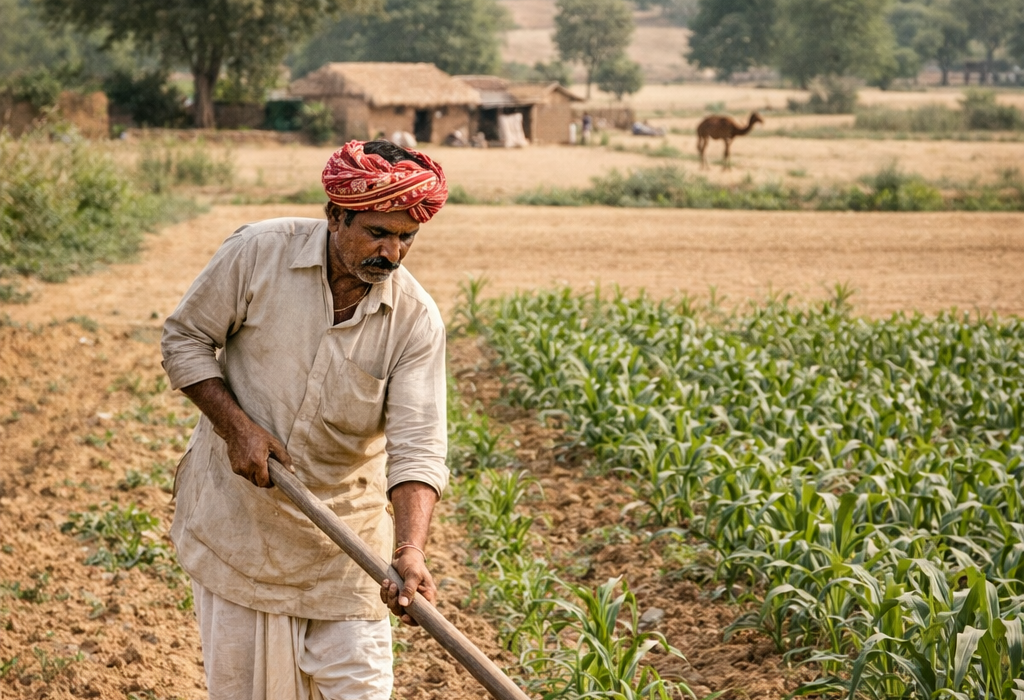
Santosh’s farm was not always productive. After a family land division, she and her husband were left with barely 1.25 acres of dry, cracked land that could only grow traditional crops like bajra and jowar. Income was uncertain, and financial stress was constant. Still, she decided to experiment. She began planting pomegranates, mosambi, and eventually apples, changing irrigation methods, improving soil quality, and relying on organic practices. Many seasons failed. Some plants dried up. There were moments of exhaustion and self-doubt—but no quitting.
Year after year, Santosh quietly refined her techniques. She adjusted watering schedules, tested soil treatments, and protected young plants from extreme heat. Slowly, something remarkable happened. The pomegranate plants flourished, and then, to everyone’s surprise, the apple trees began to bear fruit. What was once dismissed as impossible became visible proof hanging from branches in the middle of Rajasthan’s arid land.
Her success turned disbelief into curiosity. Neighbours who once mocked her now came seeking advice. Agricultural officers began visiting her farm. Over the years, Santosh Devi earned recognition as an innovative farmer at district and state levels. Her orchard became a symbol of what determination and local innovation can achieve—even without advanced degrees or large investments.
This January, her long journey reached an emotional milestone. Santosh Devi received an official invitation from the President of India to attend the 2026 Republic Day celebrations, recognizing her extraordinary contribution to agriculture. When the letter arrived by post, her family and entire village celebrated. Her son described the moment as one filled with tears of pride—years of silent struggle finally acknowledged at the highest national level.
Speaking after receiving the invitation, Santosh Devi said she felt her decade-long effort had finally been rewarded. “There were days when I felt completely exhausted,” she shared, “but I kept changing methods—soil, water, everything. I believed the land would respond one day.” Today, that belief stands validated, not just by fruit on trees, but by national recognition.
Santosh Devi Khedar’s story is more than a farming success. It is a powerful reminder that innovation doesn’t always come from laboratories or cities—sometimes, it grows quietly in fields, nurtured by patience, courage, and an unshakable dream. Her journey from an arid village in Sikar to an invitation from Rashtrapati Bhavan has become a beacon of hope for farmers, women, and dreamers across India.
Detail On Beri Village
Beri village is no longer just another drought-prone settlement. It represents a quiet transformation happening across rural India—where farmers are adapting instead of giving up. The success stories emerging from such villages show that even in difficult climates, agriculture can survive with patience, innovation, and belief.
Beri’s fields may still face heat, dust, and uncertainty—but they now also carry hope, proving that change doesn’t always come loudly. Sometimes, it grows slowly, season by season, from the soil itself.
In villages like Beri, women have always worked in fields—but their role often went unrecognised. Today, that is slowly changing. Women are increasingly:
-
Managing orchards and kitchen gardens
-
Taking part in self-help groups (SHGs)
-
Adopting innovative practices in seed selection, composting, and crop care
Stories like Santosh Devi’s have inspired many rural women to see farming not just as labour, but as decision-making and innovation.