







Surat Celebrates a Greener Ganesh Chaturthi With Eco-Friendly Cow-Dung Ganpati Idols
Surat, September 2026
Ganesh Chaturthi celebrations in Surat are taking an environmentally conscious turn this year, with an innovative initiative showing how tradition and sustainability can come together beautifully.
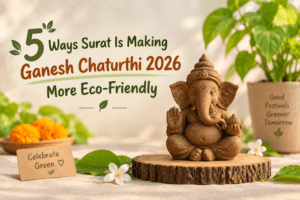
At the Sundaram Gau Vigyan Kendra, located on Vav-Jokha Road in Kamrej, Ganesh idols are being created using cow dung and natural materials. The initiative offers devotees an alternative for celebrating Ganeshotsav while reducing the environmental impact associated with conventional idol-making and immersion practices.
The centre has described the idols as “super eco-friendly” because they are made primarily from a biodegradable material that can return to nature after the festival.
Turning a Natural Material Into Ganesh Idols
The process of creating these unique Ganesh idols begins with cow dung, which is converted into a fine powder. The powder is then mixed with natural adhesive and placed into moulds to create the idols.
According to reports, water-based and eco-friendly colours are used to decorate the finished idols, helping avoid harmful chemicals in the process.
The initiative is being carried out by Ashwin Baldaniya and his team at Sundaram Gau Vigyan Kendra. The centre has reportedly been caring for around 50 cows for the past five years and creating useful products from cow dung and cow urine.
For Ganesh Chaturthi 2026, the team has taken this work a step further by transforming cow dung into attractive Ganesh idols that devotees can bring home for worship.
An Eco-Friendly Approach to Visarjan
One of the most interesting aspects of these Ganesh idols is what happens after the celebrations are complete.
Traditionally, Ganesh Chaturthi concludes with visarjan, or immersion of the idol. When idols containing non-biodegradable materials or certain chemical paints are immersed, they can create environmental concerns.
The cow-dung Ganesh idols provide a different approach.
Devotees can immerse the idol at home in a container or place it near the roots of a plant or tree. As the biodegradable material breaks down, it can become organic matter for plants.
This creates a meaningful cycle — an idol made from a natural material returns to nature after being worshipped.
The initiative is particularly relevant in Surat, where protecting water bodies during Ganeshotsav remains an important concern. The Surat Ganesh Utsav Samiti provides information about artificial ponds for immersion and highlights the importance of keeping the Tapi River clean.
Different Sizes for Different Homes
Another encouraging aspect of the Kamrej initiative is accessibility.
The cow-dung Ganesh idols are reportedly being produced in sizes ranging from around 3 inches to 2.5 feet, making them suitable for different types of celebrations.
Prices have also been kept across a broad range, reportedly beginning at approximately ₹50 and going up to ₹1,800, depending on the size and design.
This means families looking for a small Ganpati for their homes as well as those wanting a larger idol can consider an environmentally conscious option.
Surat Embraces Eco-Friendly Ganeshotsav
The cow-dung Ganesh initiative is part of a wider movement towards environmentally responsible Ganesh Chaturthi celebrations in Surat.
This year, an exhibition and sale of eco-friendly clay Ganesh idols was also organised at Jogani Nagar Party Plot in Adajan. The event showcased clay idols created by women artisans from Surat, Ankleshwar, Hansot and Bharuch, simultaneously promoting environmental awareness and local craftsmanship.
Elsewhere in the city, preparations have included large eco-conscious installations as well. These developments indicate that sustainable materials are increasingly becoming part of conversations around how major festivals can be celebrated.
Tradition and Sustainability Can Grow Together
Ganesh Chaturthi is deeply connected with devotion, family, community and celebration. Initiatives such as the cow-dung Ganesh idols demonstrate that protecting the environment does not necessarily mean leaving traditions behind.
Instead, traditional celebrations can evolve through thoughtful choices.
Choosing biodegradable idols, using eco-friendly colours, reducing unnecessary waste and following responsible immersion practices are relatively simple steps that can collectively make a meaningful difference.
The Sundaram Gau Vigyan Kendra initiative also presents an interesting example of turning a readily available natural by-product into something useful, artistic and culturally meaningful.
As devotees welcome Ganpati Bappa into their homes this Ganesh Chaturthi, Surat’s eco-friendly initiatives carry an uplifting message: faith and care for nature can go hand in hand.
Read more positive news on positivedaynewspaper.