









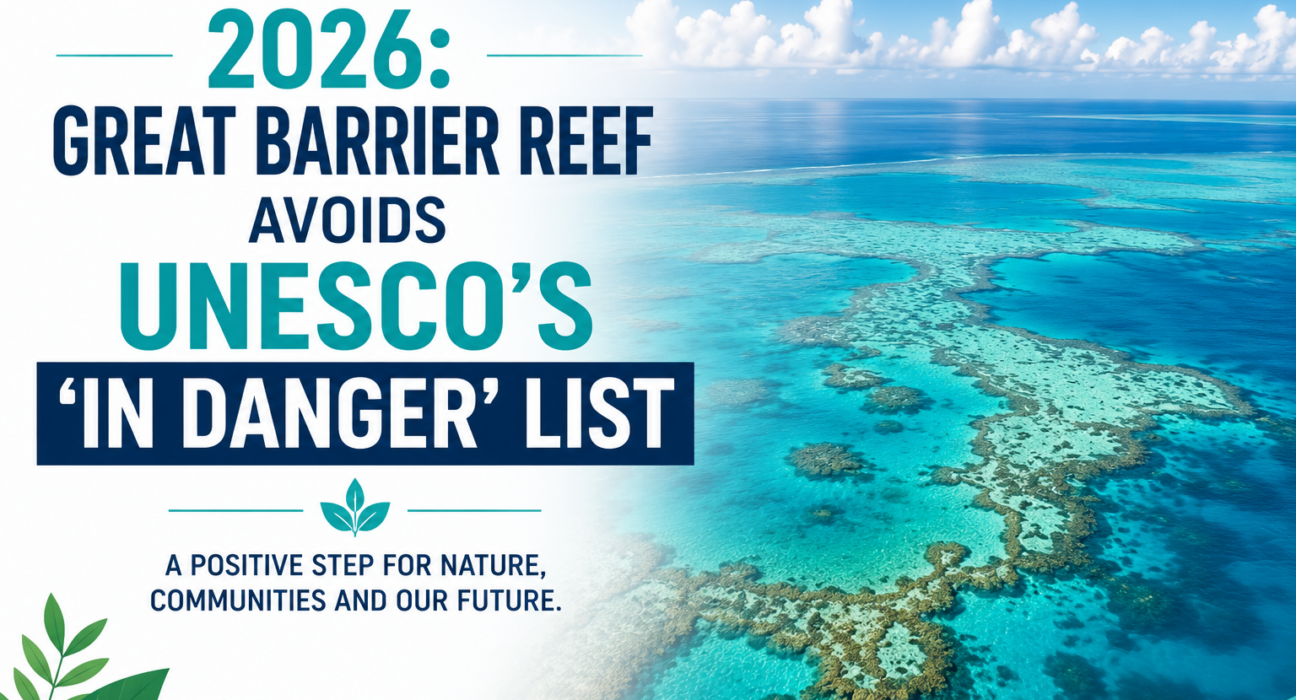
Great Barrier Reef Avoids UNESCO’s ‘In Danger’ List, Offering Hope for Global Conservation
The Great Barrier Reef, one of the world’s most spectacular natural wonders, has received encouraging news after UNESCO decided not to place it on the “World Heritage in Danger” list. The decision recognizes Australia’s ongoing efforts to protect and restore the reef through large-scale conservation projects, scientific research, and improvements in water quality.
Stretching for more than 2,300 kilometers along Australia’s northeast coast, the Great Barrier Reef is the largest coral reef system on Earth. It is home to thousands of marine species and supports a thriving tourism industry. While environmental challenges remain, UNESCO’s latest decision is being viewed as an important acknowledgment that sustained conservation efforts are making a positive impact.
A Global Natural Treasure
The Great Barrier Reef is one of the most biodiverse ecosystems in the world. It provides habitat for over 1,500 species of fish, hundreds of coral species, sea turtles, dolphins, sharks, and countless other marine organisms.
Recognized as a UNESCO World Heritage Site in 1981, the reef attracts millions of visitors every year and plays a vital role in Australia’s economy through tourism, fishing, and scientific research.
Its ecological importance extends far beyond Australia, making it a global symbol of marine biodiversity and environmental conservation.
Why UNESCO’s Decision Matters
UNESCO’s “World Heritage in Danger” list is reserved for sites facing serious threats that require urgent international attention. Being placed on the list can increase global awareness and support but also signals significant environmental concerns.
After reviewing Australia’s conservation efforts and progress reports, UNESCO’s World Heritage Committee decided not to add the Great Barrier Reef to the danger list at this time.
The decision reflects confidence in the country’s ongoing initiatives to improve water quality, reduce pollution, strengthen scientific monitoring, and protect marine ecosystems. It also recognizes the continued investment made by Australian authorities to safeguard the reef for future generations.
Years of Conservation Efforts
Protecting an ecosystem as vast as the Great Barrier Reef requires long-term commitment.
Australia has invested billions of dollars in reef conservation, including programs to reduce agricultural runoff, improve coastal water quality, restore damaged habitats, and expand scientific monitoring.
Researchers continue studying coral health, marine biodiversity, and climate impacts while developing innovative methods to improve reef resilience.
Local communities, Indigenous groups, environmental organizations, tourism operators, and scientists have also worked together to support conservation projects and promote sustainable practices.
These combined efforts have helped strengthen protection measures across the reef.
Economic and Environmental Importance
The Great Barrier Reef is not only an environmental treasure but also an economic asset.
According to Australian officials, the reef supports approximately 77,000 jobs and contributes around AU$9 billion each year to the national economy through tourism and related industries.
Millions of visitors travel from around the world to experience its vibrant coral reefs, marine wildlife, and crystal-clear waters.
Protecting the reef therefore benefits both biodiversity and local livelihoods, demonstrating how environmental conservation and economic development can work together.
A Balanced Perspective
While UNESCO’s decision is positive, experts caution that the Great Barrier Reef still faces serious challenges.
Climate change remains the biggest long-term threat. Rising ocean temperatures have caused multiple coral bleaching events in recent years, while severe storms and changing ocean conditions continue to place stress on marine ecosystems.
UNESCO has emphasized that Australia must continue strengthening conservation measures and regularly report on the reef’s condition. Ongoing investment, scientific research, and climate action will remain essential to ensure the reef’s long-term survival.
The latest decision should therefore be seen as recognition of progress rather than a sign that all environmental concerns have been resolved.
A Positive Message for Global Conservation
The Great Barrier Reef’s story offers an encouraging lesson for countries around the world.
Environmental restoration and conservation require patience, cooperation, and long-term planning. Governments, scientists, local communities, and international organizations all play important roles in protecting natural ecosystems.
UNESCO’s decision demonstrates that consistent investment in conservation can produce measurable results, even when challenges remain.
It also encourages other nations to continue protecting forests, wetlands, coral reefs, rivers, and other important ecosystems through science-based policies and sustainable management.
Looking Ahead
The future of the Great Barrier Reef will depend on continued conservation efforts and global cooperation.
As research, technology, and environmental awareness continue to advance, there is growing hope that more effective solutions will help strengthen the reef’s resilience against future challenges.
For now, UNESCO’s decision provides a welcome reminder that dedicated environmental action can make a real difference. It is a positive step for Australia, for marine conservation, and for everyone who values the protection of our planet’s natural heritage.
The Great Barrier Reef remains one of Earth’s greatest natural wonders, and its continued protection serves as an inspiring example of how determination, science, and collaboration can help preserve extraordinary ecosystems for generations to come.
Explore more Positive News