








Gujarat Gets ₹1,152 Crore Green-Energy Transmission Project to Support 7,500 MW Renewable Power
Gujarat is strengthening its position as one of India’s leading renewable-energy destinations with a major new power-transmission project linked to the Lakadia Renewable Energy Zone. Power Grid Corporation of India has been declared the successful bidder for an interstate transmission project designed to integrate 7,500 MW of renewable energy from the Lakadia Renewable Energy Zone Phase II.
The project carries quoted annual transmission charges of ₹1,152.49 crore and is expected to play an important role in connecting renewable-energy generation with the wider electricity network. Power Grid received the Letter of Intent for the project on September 3, 2026, after being selected through a tariff-based competitive bidding process.
The development is significant because generating renewable electricity is only one part of the clean-energy transition. Once solar and wind power are produced, the electricity needs a strong transmission network to reach homes, businesses and industries. The new infrastructure at Lakadia is intended to strengthen that crucial connection.
Strengthening Gujarat’s Renewable-Energy Infrastructure
The Lakadia Renewable Energy Zone is emerging as an important centre for large-scale renewable-energy development in Gujarat. Phase II of the zone has a planned renewable-energy capacity of 7,500 MW.
The new transmission project will help integrate this power into the interstate electricity system. Under the project, Power Grid will develop and operate the infrastructure on a Build, Own, Operate and Transfer basis.
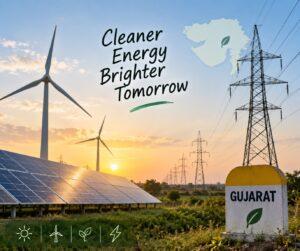
One of the key components will be a new 765/400 kV Lakadia-II substation. The project will also include the construction of 765 kV transmission lines across Gujarat, along with associated equipment and transmission bays.
These facilities will help create the infrastructure needed to move large amounts of renewable electricity from generation zones to areas where power is required.
Why Transmission Matters for Clean Energy
Renewable-energy projects often produce electricity in areas with strong natural resources, such as locations that receive abundant sunlight or have suitable conditions for wind generation. However, these locations are not always close to major cities and industrial centres.
This makes transmission infrastructure essential.
A solar or wind project can generate clean electricity, but without sufficient transmission capacity, that electricity cannot be efficiently delivered to consumers. Strong transmission networks therefore act as a bridge between renewable-energy generation and everyday electricity demand.
Gujarat’s investment in this infrastructure can help support the state’s broader renewable-energy ambitions while also contributing to India’s national clean-energy goals.
Supporting a Cleaner Energy Future
Solar and wind power are increasingly important to India’s efforts to expand cleaner sources of electricity. Large renewable-energy zones allow multiple projects to be developed in areas that are suitable for renewable generation.
The Lakadia project is another example of infrastructure being developed alongside renewable-energy capacity.
The 7,500 MW figure gives an indication of the scale involved. Such a large renewable-energy zone requires a transmission system capable of handling substantial volumes of electricity safely and reliably.
The project will therefore not simply involve power lines. It will include high-voltage equipment, substations and systems designed to support the stability of the electricity network.
Advanced Technology for Grid Stability
Another important component of the project is the installation and commissioning of a synchronous condenser at the Lakadia-II substation.
Synchronous condensers can help provide grid-support functions such as voltage and reactive-power support. This becomes increasingly important as electricity systems incorporate larger amounts of renewable generation.
The inclusion of such technology demonstrates that the project is not only about adding transmission capacity but also about creating infrastructure capable of supporting a modern electricity network.
As renewable energy becomes a larger part of the power mix, maintaining a stable and reliable grid becomes increasingly important.
A Boost for Gujarat’s Green-Energy Ambitions
Gujarat has significant potential for renewable-energy development, particularly in solar and wind power. Large projects in the state are contributing to the expansion of India’s clean-energy infrastructure.
The new Lakadia transmission project can help unlock that potential by providing the network required to transport electricity generated in the renewable-energy zone.
It also highlights an important shift in the way clean-energy development is being approached. Renewable energy is no longer only about building solar panels and wind turbines. It increasingly involves developing the entire ecosystem around them — including transmission networks, substations, grid-management systems and other supporting infrastructure.
Creating Long-Term Infrastructure
The Power Grid project is being developed as a long-term infrastructure asset. Under the Build, Own, Operate and Transfer model, the company will be responsible for developing and operating the transmission system as part of the project arrangement.
Long-term transmission infrastructure can provide the foundation for continued renewable-energy development. Once the necessary network is available, it can help make it easier to integrate additional renewable generation into the broader electricity system.
This creates the possibility of a positive cycle: more renewable generation requires stronger transmission, stronger transmission enables greater integration, and greater integration can support the continued expansion of clean electricity.
A Positive Step for India’s Energy Transition
The ₹1,152.49 crore annual transmission project at Lakadia is an important development for Gujarat’s renewable-energy journey.
With 7,500 MW of renewable-energy capacity planned for integration, the project represents a significant investment in the infrastructure needed to support cleaner electricity.
For Gujarat, it strengthens the state’s role in India’s renewable-energy expansion. For businesses and industries, better transmission infrastructure can support the availability of electricity as demand continues to grow. And for the country’s broader energy transition, projects like Lakadia demonstrate the importance of building the networks required to move renewable power efficiently.
The move also offers a positive reminder that the transition towards cleaner energy is happening through many interconnected steps. Solar and wind projects may generate the electricity, but transmission networks carry it where it is needed.
With new substations, high-voltage transmission lines and advanced grid-support technology planned at Lakadia, Gujarat is building more than a power network. It is building infrastructure for a cleaner, more connected and more sustainable energy future.
Read more about Gujarat’s green-energy development


2 Comments