








Gujarat Gets ₹35,000 Crore Connectivity Boost With Major Rail and Road Projects
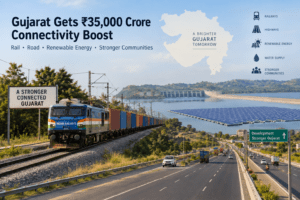
Gujarat is set to receive a major boost in connectivity and infrastructure with development projects worth more than ₹35,000 crore being inaugurated or launched across the state. The projects cover railways, highways, renewable energy, water supply and other important areas, with the aim of strengthening transportation networks and supporting economic growth.
The projects were announced and launched during Prime Minister Narendra Modi’s visit to Gujarat. The large-scale infrastructure push is expected to improve connectivity between cities, towns, industrial centres and rural areas while creating new opportunities for businesses and communities.
For a state known for its strong industrial base, ports, textile sector, diamond industry and growing urban centres, efficient connectivity plays an important role in supporting continued development.
Strengthening Gujarat’s Railway Network
One of the key components of the development programme is the expansion of railway infrastructure.
A major focus is the Western Dedicated Freight Corridor, an important railway network designed specifically for freight transportation. Sections of the corridor in Gujarat are being developed to improve the movement of goods across the country.
Dedicated freight infrastructure can help reduce pressure on passenger railway routes while allowing goods to move more efficiently. For industries, manufacturers and exporters, improved freight connectivity can reduce transportation challenges and strengthen supply chains.
Gujarat’s position as a major industrial and trading state makes such infrastructure particularly valuable.
The state is home to important ports and industrial centres, and stronger rail connections can help move raw materials and finished products between manufacturing hubs, markets and ports.
New Railway Connectivity for Communities
The connectivity push also includes new railway projects designed to improve access for communities.
Among the projects is the Jobat-Tanda railway line, which is expected to strengthen railway connectivity in parts of Gujarat and improve access to transportation for people living in the region.
Rail connectivity can have an impact far beyond travel. Better railway access can make it easier for students to reach educational institutions, workers to travel for employment and families to access markets and essential services.
For developing areas, railway infrastructure can also encourage economic activity by improving connections with larger towns and cities.
Highway Development Across the State
Road infrastructure is another major part of Gujarat’s development programme.
Several highway projects have been launched or inaugurated as part of the ₹35,000 crore-plus connectivity push. Improved highways can make travel between different parts of the state faster and more convenient while strengthening connections between industrial and commercial centres.
For businesses, good road connectivity can be particularly important. Trucks carrying goods need reliable routes to move efficiently between factories, warehouses, markets and ports.
Better roads can also benefit everyday commuters and travellers by improving accessibility between towns and cities.
As Gujarat continues to urbanise and its economy expands, strong road infrastructure will remain an important part of the state’s development.
Renewable Energy Gets a Place in the Development Push
The infrastructure programme is not limited to transport.
A 110 MW floating solar project at Kadana Dam is also part of the wider development initiatives. Floating solar projects use water surfaces to install solar panels, offering an alternative way to develop renewable-energy capacity.
The inclusion of renewable energy alongside railway and highway projects reflects the growing importance of sustainable infrastructure.
India is expanding its renewable-energy capacity as it works towards a cleaner energy future. Projects such as floating solar can contribute to this transition while making productive use of available spaces.
For Gujarat, which has significant solar and wind-energy potential, renewable-energy development can become an important part of its future infrastructure landscape.
Better Connectivity Can Support Economic Growth
Infrastructure investment often creates benefits that extend beyond the projects themselves.
A new railway line can connect communities with markets. A new highway can reduce travel time for businesses. A freight corridor can improve logistics. Renewable-energy projects can strengthen electricity infrastructure.
Together, these developments can create a stronger foundation for economic activity.
Gujarat already has a large manufacturing and industrial ecosystem. Better transportation infrastructure can help industries move goods more efficiently and strengthen the state’s role in national and international supply chains.
Improved connectivity can also make it easier for smaller businesses and local producers to access larger markets.
Opportunities for Rural and Developing Areas
One of the most positive aspects of infrastructure development is its potential to connect areas that have historically had fewer transportation options.
When roads and railway lines reach developing regions, they can create new opportunities for residents. Better connectivity can make education, healthcare, employment and commerce more accessible.
For rural communities, improved transportation can also help farmers and local producers transport their goods to larger markets.
This means that infrastructure is not simply about concrete, steel and railway tracks. It is about creating connections between people and opportunities.
Building for Gujarat’s Future
The scale of the ₹35,000 crore-plus development programme highlights the importance of long-term infrastructure planning.
Gujarat’s population and economy continue to grow, and the demand for efficient transportation and reliable infrastructure will grow along with them.
New railway lines, freight corridors and highways can help prepare the state for this future. At the same time, investments in renewable energy and other public infrastructure can support a more sustainable model of development.
The combination of transport, energy and connectivity projects creates the possibility of a more integrated infrastructure network across the state.
A Connected Gujarat
The latest infrastructure push offers a positive outlook for Gujarat’s future.
From freight trains moving goods across the state to highways connecting cities and villages, each project contributes to making movement easier and strengthening links between communities and businesses.
The addition of renewable-energy projects also shows that the state’s development is increasingly being connected with sustainability.
For residents, better connectivity can mean shorter journeys and improved access to opportunities. For businesses, it can mean stronger logistics and easier movement of goods. For developing regions, it can open doors to new possibilities.
The ₹35,000 crore-plus investment is therefore more than a collection of individual projects. It represents an effort to build the infrastructure needed for a more connected, accessible and economically vibrant Gujarat.
As new railway lines, highways, freight corridors and renewable-energy facilities take shape, the benefits are expected to extend across generations — helping connect people, businesses and communities while laying stronger foundations for the state’s future.
Read more positive news about Gujarat’s development