








From Rural To Urban
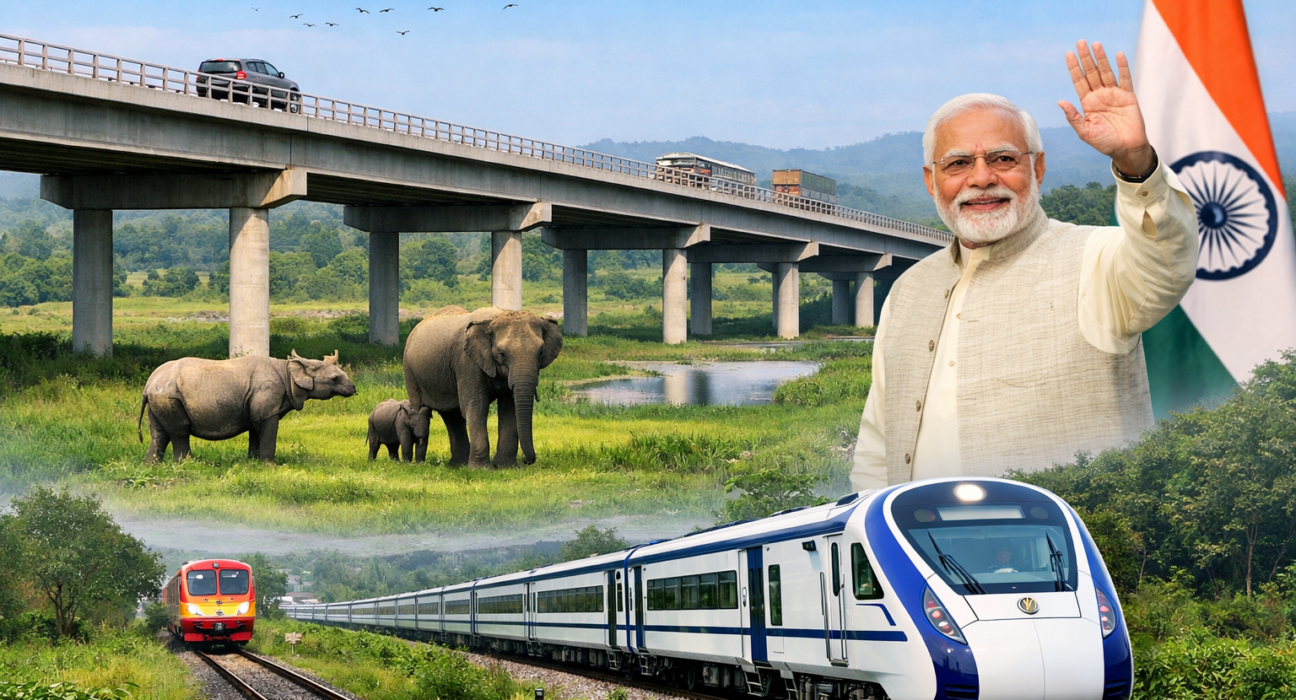
Assam is set to witness a major push in infrastructure and connectivity as Prime Minister Narendra Modi visits the state to lay the foundation stone of the Kaziranga Elevated Corridor and flag off new Vande Bharat and Amrit Bharat trains. The visit highlights a rare blend of development, environmental protection, and better travel options for millions of people in the Northeast. One of the most significant announcements is the Kaziranga Elevated Corridor, a landmark road project designed to protect wildlife while improving travel. The elevated highway will pass through the Kaziranga region, allowing animals like one-horned rhinos, elephants, and deer to move freely underneath without the danger of speeding vehicles. For years, traffic congestion and wildlife accidents have troubled this stretch—this corridor aims to solve both problems at once, making journeys safer for people and animals alike. At the same time, rail connectivity in the Northeast is getting a major upgrade. The Prime Minister will flag off Vande Bharat and Amrit Bharat trains, bringing faster, more comfortable and modern rail travel to Assam and neighbouring states. The Vande Bharat train, known for its speed and world-class facilities, will significantly reduce travel time, while Amrit Bharat trains will offer affordable and improved long-distance travel for common passengers, students, and workers.
Tourism and employment
Together, these projects are expected to boost tourism, trade and employment, while strengthening Assam’s link with the rest of India. For local residents, it means shorter journeys, safer roads, better trains, and new economic opportunities. For wildlife lovers and conservationists, it marks a thoughtful step toward development that respects nature. This visit sends a clear message: growth in the Northeast will go hand-in-hand with sustainability, connectivity and inclusion. For villagers who have grown up watching traffic jams stretch for hours during tourist season, the elevated corridor promises less noise, less chaos, and safer surroundings. Children going to school, farmers moving cattle, and locals crossing roads near the park will no longer have to worry as much about speeding vehicles cutting through wildlife zones. Tour guides and small homestay owners nearby are hopeful too. Better connectivity often means more responsible tourism, not just more tourists. Visitors can reach Kaziranga faster and more comfortably, spend less time on the road, and more time experiencing Assam’s forests, rivers, and culture. That means steady income for local families, not just seasonal rushes. The new trains tell another human story. For students travelling long distances for education, migrant workers visiting home, and elderly passengers who find overnight journeys exhausting, modern and affordable trains bring comfort with dignity. Clean coaches, smoother rides, and reduced travel time turn long journeys into something less stressful and more humane. There’s also a sense of pride among locals. Seeing a world-famous national park like Kaziranga become a symbol of development done thoughtfully sends a strong message—that growth doesn’t always have to come at nature’s cost. It can coexist, if planned with care.
Insides News
Inside the planning rooms, one concern kept coming up again and again — Kaziranga must not be disturbed. Engineers, wildlife experts and forest officials worked together to design the elevated corridor in a way that keeps animal movement natural. The height of the pillars, the spacing between them, and even the noise-absorbing road surface were planned so animals don’t feel trapped or threatened. Construction itself is being phased carefully. Heavy work is scheduled away from peak animal movement seasons, especially during monsoon floods, when wildlife migrates to higher ground. Forest teams will monitor animal behaviour in real time, ensuring that work pauses if wildlife movement increases. For the people building it, this isn’t a routine road project — it’s working inside a living ecosystem. On the railway side, the introduction of new trains means intense coordination behind the scenes. Drivers, station masters, maintenance crews and signalling teams across multiple states are being trained to handle high-speed and long-distance modern trains. Small stations along the route are quietly being upgraded — better platforms, clearer signage, cleaner waiting areas — changes that regular passengers notice only when life becomes easier. Security and safety teams are also part of the internal story. With more visitors and faster trains, systems are being strengthened to ensure safer travel, especially at night and during peak seasons. For railway staff who have worked for decades on older trains, this shift feels like stepping into a new era — challenging, but exciting.