





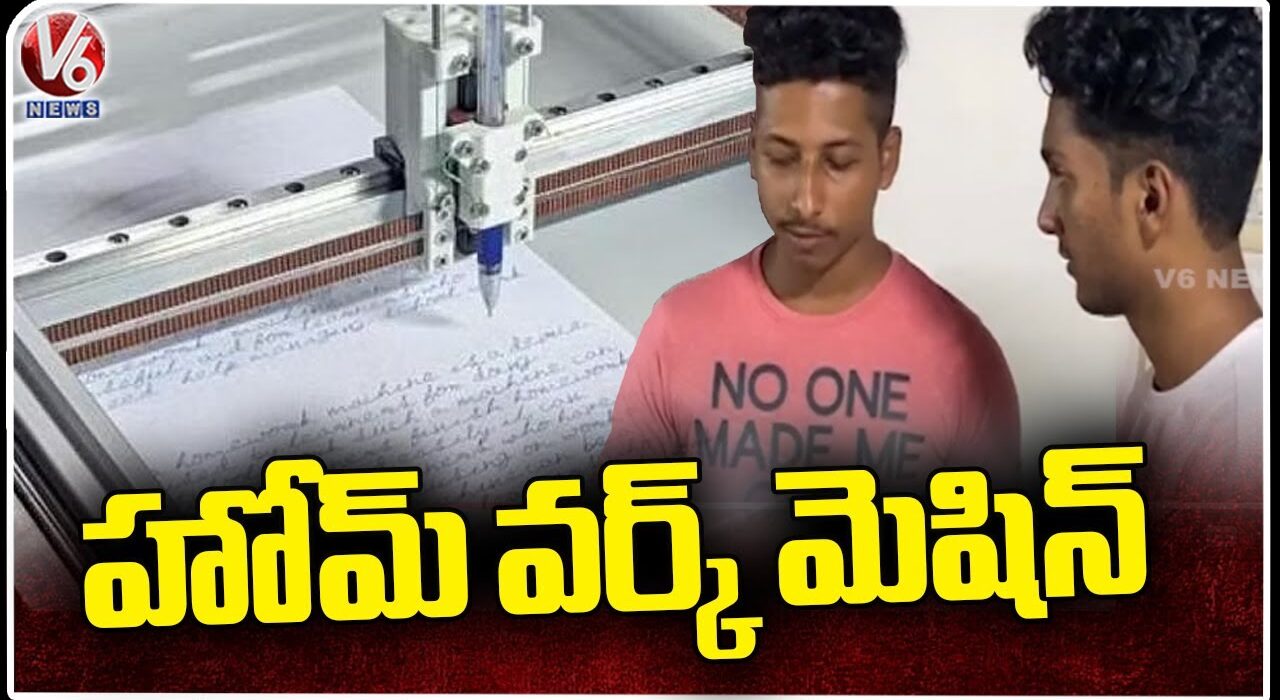
KOCHI, KERALA — Imagine being in a fast-paced lecture or a busy meeting, and instead of frantically scribbling notes, you simply speak, and your words appear on the screen in your own handwriting. Sounds like something out of a sci-fi movie, right? Well, a young engineering student from Kerala has just made it a reality.
Arjun, a final-year computer science student, has developed a groundbreaking AI tool called “Talk to Write.” This isn’t just a simple voice-to-text converter; it’s an AI that takes your spoken words and transforms them into beautifully flowing, handwritten notes.
The idea came from a very real frustration. “I was always frustrated with the time it took to write down notes during lectures,” Arjun explained. “I wanted a way to capture information quickly and efficiently, without losing that personal touch of handwriting.”
“Talk to Write” is a testament to Arjun’s hard work and ingenuity. The AI uses a sophisticated combination of speech recognition and generative handwriting models. When you speak, the AI transcribes the words and then, using a carefully curated dataset of various handwriting styles, generates a digital representation of those words in a natural, handwritten script.
The potential for this technology is huge. For students, it could mean the end of frantically scribbling notes during a fast-paced lecture. For professionals, it offers a quick and easy way to jot down ideas during meetings without the distraction of a keyboard. The AI even has the potential to assist individuals with disabilities who may find traditional writing challenging.
Arjun isn’t stopping here. He plans to further refine “Talk to Write,” with ambitions to add features like personalized handwriting styles and the ability to export notes in various digital formats. He hopes to make the tool accessible to everyone, potentially as a mobile application or a web-based service.
Arjun’s story is a shining example of the talent and potential that exists within Kerala’s student community. His creation not only solves a practical problem but also pushes the boundaries of what is possible with artificial intelligence, proving that sometimes, the most revolutionary ideas are born from the simplest of frustrations.