









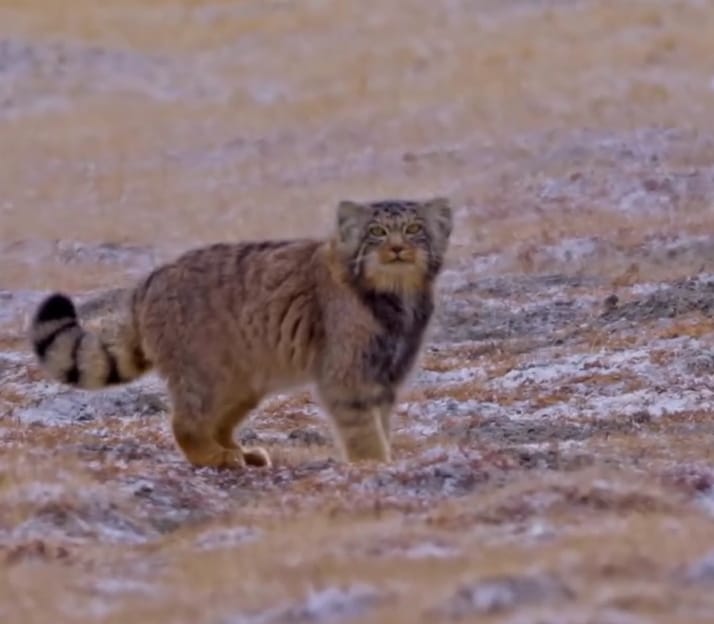
In a groundbreaking discovery, local communities and conservationists have successfully recorded rare footage of the elusive Pallas’s Cat using camera traps and field observations. This remarkable finding highlights not just the breathtaking beauty of the Himalayan landscapes, but also the incredible biodiversity and ecological richness that these regions hold.
The discovery emphasizes that the Himalayas are not only known for their stunning mountains but also for being home to rare and fragile wildlife species. The presence of Pallas’s Cat, a rarely documented wild feline, proves the importance of continued research and conservation efforts in these areas.
The study reveals that the Pallas’s Cat thrives in cold, harsh, and rocky terrains of the Himalayas, perfectly adapted to survive in such extreme environments. This species has been spotted across regions such as Changthang, Himis, Hanle, and other high-altitude landscapes at elevations ranging from 3,000 to 4,800 meters.
For scientists and wildlife enthusiasts, this discovery is a significant step in understanding the distribution and survival patterns of this unique species. Moreover, it reinforces the role of traditional knowledge and sustainable practices combined with scientific conservation in safeguarding biodiversity.
Beyond ecological importance, the findings also create opportunities for local communities. Sustainable eco-tourism, wildlife awareness, and conservation-driven livelihoods can provide long-term benefits, ensuring that both nature and people coexist harmoniously.
The recording of the Pallas’s Cat in such a vast and challenging landscape is not just a scientific breakthrough, but also a reminder of the Himalayan region’s role as a critical haven for global biodiversity. Protecting such rare species is vital for maintaining ecological balance and preserving nature’s legacy for future generations.