







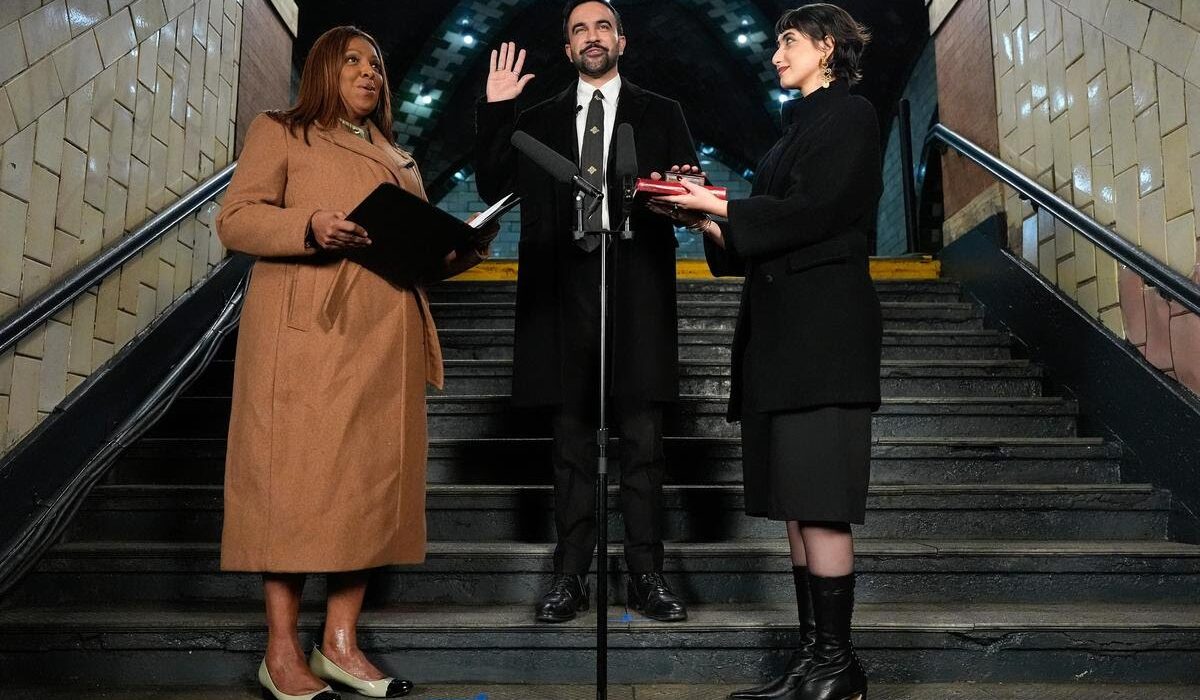
The swearing-in of Zohran Mamdani as the Mayor of New York City marks a profound shift in the political and cultural history of the world’s most famous metropolis. On January 1, 2026, Mamdani took his oath of office in a setting as unique as his journey to City Hall: the historic, decommissioned City Hall subway station. Surrounded by the stunning tiled arches of a bygone era, he became a symbol of a new generation’s arrival at the helm of American urban leadership.
A Mayor of Many Firsts
Zohran Mamdani’s inauguration is a tapestry of historic milestones. At 34, he is the city’s youngest mayor in generations, bringing a millennial perspective to a role often defined by seasoned political veterans. More significantly, his ascent represents a breakthrough for representation: he is New York City’s first Muslim mayor, its first mayor of South Asian descent, and the first to have been born in Africa.
The son of acclaimed filmmaker Mira Nair and academic Mahmood Mamdani, Zohran’s path from Kampala, Uganda, to the “Canyon of Heroes” is a quintessential New York story. Having moved to the city at age seven and later becoming a naturalized citizen in 2018, his leadership reflects the diverse, immigrant-driven spirit that New York has long championed but seldom seen reflected in its highest office.
A Vision for an Affordable City
The choice of a subway station for his midnight swearing-in, which was administered by Attorney General Letitia James, was more than aesthetic; it was a nod to his campaign’s central pillar: affordability and public service. Mamdani, a democratic socialist, ran on a transformative platform dubbed “Trump-proofing” New York, focusing on the material needs of everyday residents.
His agenda includes ambitious “socialist” experiments such as:
- Universal Free Buses: Treating public transit as a fundamental right.
- Rent Freezes: Aiming to provide stability for over one million households in an increasingly expensive market.
- City-Run Grocery Stores: A pilot program to combat food deserts and rising inflation.
Challenges and the Road Ahead
While the atmosphere of his inauguration was one of hope and celebration, bolstered by a public ceremony led by Senator Bernie Sanders, Mamdani inherits a city at a crossroads. New York is physically recovering from the pandemic era, with tourism and employment returning to normal, yet it remains gripped by a cost-of-living crisis that threatens to push out the very working-class residents Mamdani represents.
Furthermore, the new Mayor faces the daunting task of navigating a complex relationship with the federal government. Despite a surprisingly cordial post-election meeting with President Donald Trump, deep ideological divides over immigration and federal funding remain a constant shadow over his nascent administration.
Zohran Mamdani’s mayoralty begins not just with a change in leadership, but with a change in the city’s self-image. By placing his hand on a Quran in a century-old subway station, he has signaled that the future of New York City belongs to the outsiders, the dreamers, and the workers who keep its heart beating.