









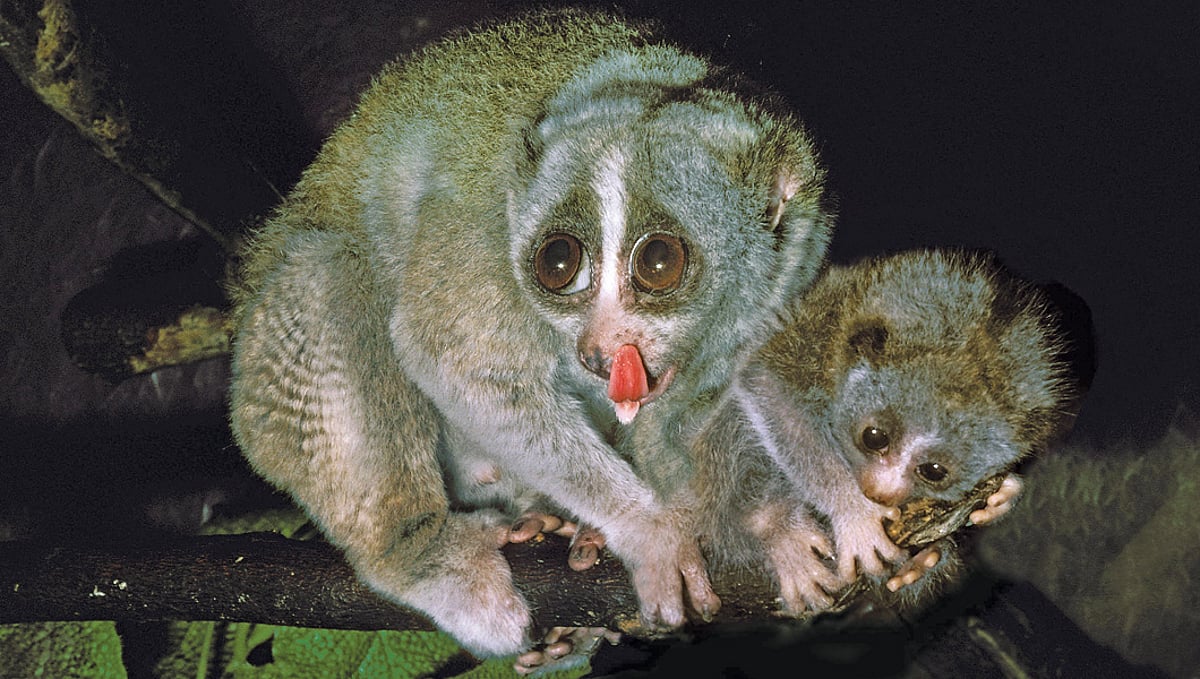
In the quiet, canopy-laden corridors of the Western Ghats, a pair of large, glowing amber eyes keeps a silent vigil. This is the Grey Slender Loris, a small, nocturnal primate that has long been shrouded in mystery and folklore. Recently, a wave of positive conservation efforts across Kerala and Tamil Nadu has begun to shed light on this “Night Watcher,” transforming age-old mythical beliefs into a powerful movement for species protection and habitat restoration.
For generations, the slender loris was a victim of its own mystery. Deeply embedded in local folklore, it was often viewed with a mix of reverence and fear. Some traditional beliefs suggested that its body parts possessed medicinal properties for eye ailments, while others used the animal in rituals to ward off evil. However, the narrative is shifting. Conservationists and tribal communities—such as the Kattunaikkan, Kurumba, and Muthuvan—are now working together to revive folklore that protects the species rather than harms it, portraying the loris as a silent guardian of the forest.
The biological importance of the slender loris cannot be overstated. As a dedicated nocturnal hunter, it plays a crucial role in maintaining ecological balance by preying on crickets, grasshoppers, and small reptiles. Its presence is a vital indicator of forest health. Recognizing this, the governments of Kerala and Tamil Nadu have initiated specialized monitoring programs. In areas like the Kadavur Reserve Forest in Tamil Nadu, forest watchers are actively mapping canopy corridors and planting native fruit trees to ensure these primates can move safely through the trees without descending to the dangerous forest floor.
The success of these efforts lies in “Reverse Mythical Beliefs”—an educational approach that replaces harmful superstitions with scientific wonder. By highlighting the loris’s extraordinary night vision, its agile, tail-less movements, and its role as a natural pest controller, conservationists are turning local villagers into “Loris Guardians.” Schools in rural Western Ghats are now teaching children that the loris’s call is not an omen of storms, but a sign of a thriving, healthy ecosystem.
As nocturnal wildlife surveys become more common and law enforcement against illegal trade strengthens, the Grey Slender Loris is finally stepping out of the shadows of superstition and into the light of protection. The story of the “Night Watcher” is a beautiful reminder that when we change our perspective on the natural world, we don’t just save a species—we preserve the very magic of our forests.